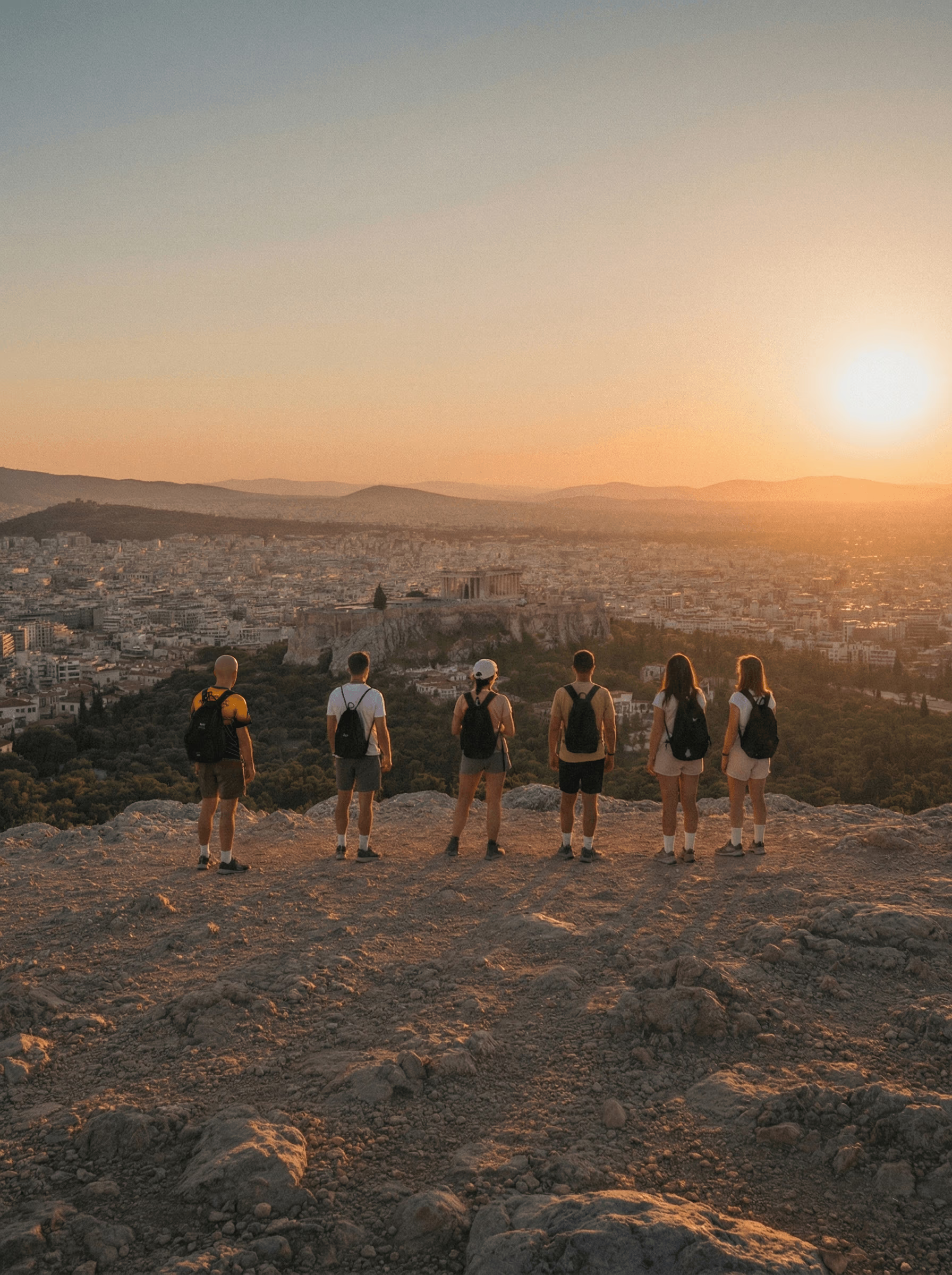
A local's route
Athens Walking Tour Itinerary: See the City on Foot
Hour by hour through Plaka, the Acropolis hills and Lycabettus. Real distances, real food stops, in the right order.

Tour leader in Athens since 2009. 17 years walking these hills, 2,000+ guests from 40 countries.
Last updated: 21 July 2026
Most people land in Athens with a phone full of screenshots and no real plan. They end up walking three times as far as they needed to, in the wrong order, in the middle of the midday heat. This Athens walking tour itinerary fixes that. It's the self-guided route I'd hand a mate who has one day in Athens on foot and wants the big stuff without the backtracking.
I've been running small-group walking experiences around this city for 17 years, and the order below is the one I'd actually walk myself. Start before seven. Be at the Acropolis gate the moment it opens. Take the flat streets and a long break when it's hot. Finish high for sunset. Do it that way and Athens in one day, all on foot, is genuinely doable and never rushed.
Nothing here needs a car, a tour bus, or a ticket you didn't want. Just decent shoes and a start time before the crowds wake up.
The One-Day Route at a Glance
This is a full day, roughly 12 to 14 km on foot with two long sit-downs built into it. It starts earlier than most itineraries you'll read, and that single decision is what makes the rest of it work. The shape of it, before the detail:
7 AM
Plaka and Anafiotika
The oldest neighbourhood in Athens with nobody in it. About 1.5 km of slow wandering.
8 AM
The Acropolis, right as it opens
In with the first few people, then down the south slope. Coffee and a snack from 9:30.
10:30 AM
Hadrian's Arch to the Panathenaic Stadium
Then back through the Zappeion, the National Garden and Parliament.
12:30 PM
Churches, Monastiraki and lunch
Mitropolis and Kapnikarea, then the market square. Sit down to eat at 1:30.
2:30 PM
Rest, or the National Archaeological Museum
Out of the heat either way. This is the bit people skip and regret.
5 PM
The Ancient Agora
The best preserved Doric temple in Greece, and hardly a queue for it.
7 PM
Sunset from Lycabettus or Philopappos
Whichever you pick, finish the day high up. About 2.5 km with the climb.
Early morning · 7-8 AM
Plaka and Anafiotika Before Anyone Else
Start where I start my own walks: the Vallianeio Megaron on Panepistimiou 32, right outside Panepistimio metro on the Red Line. Grab a freddo espresso and a spanakopita from a café on the way. That's how I start my own day here, and it's the right call for this one: tasty, but not so heavy that it slows you down over the walking ahead. You'll want both, and it's how the day is meant to begin in this city.
From Syntagma Square it's a five-minute stroll, maybe 400 metres downhill, into Plaka. At seven in the morning you'll have the oldest neighbourhood in Athens essentially to yourself. Narrow lanes, neoclassical houses, shopfronts still shuttered. Keep climbing gently towards the Acropolis rock and you'll hit Anafiotika, a cluster of about forty whitewashed island-style houses stuck to the hillside. Most day trippers walk directly underneath it and never look up.
Give yourself a solid hour up here, then start moving. You want to be standing at the Acropolis gate by eight.
This whole stretch is barely 1.5 km of walking, all of it slow. That's the point. You're warming up the legs and seeing the prettiest part of the city while it's still cool and empty.

Morning · 8-10:30 AM
The Acropolis, Right as It Opens
Be at the gate for eight, when the site opens. This is the single most important piece of timing in the whole day, and it's the one thing I'd argue about if you told me you'd rather have a lie-in. Walk in with the first handful of people and you get the Parthenon in soft morning light with room to breathe around it. Turn up at eleven instead and you're queueing in full sun behind several coach loads, looking at the same stones over other people's heads.
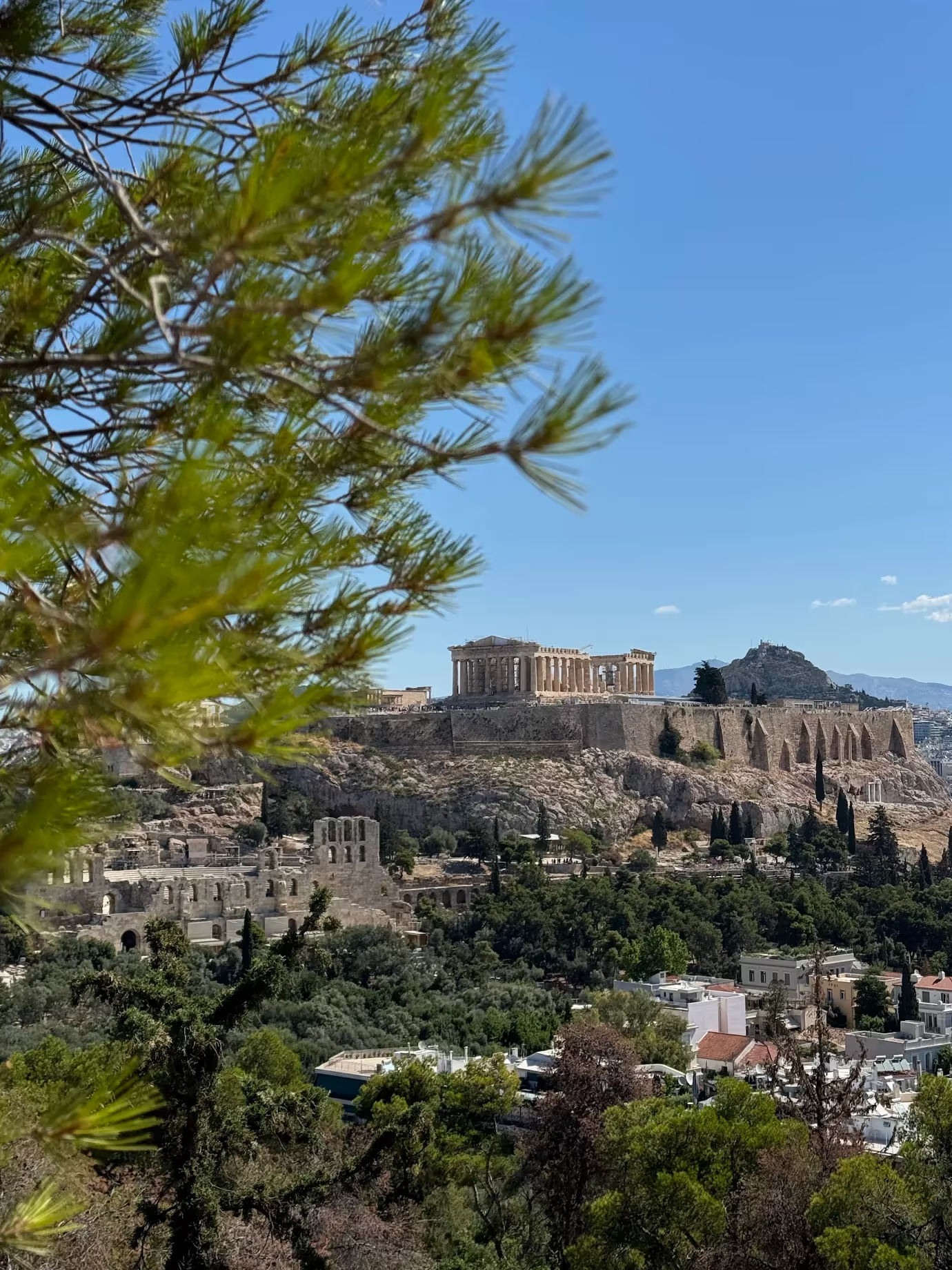
Give yourself about an hour and a half up there. Come down through the south slope past the Theatre of Dionysus and the Odeon of Herodes Atticus, then out onto Dionysiou Areopagitou, the wide pedestrian promenade that curves around the rock. No cars, marble underfoot, ancient theatres on one side and neighbourhood life on the other. It's the prettiest flat walk in the city.
Then stop properly. Around half nine, find a café and give yourself an hour with a coffee and something to eat. You've done the hardest ticketed thing on the list before most visitors have finished breakfast, and the whole rest of the day stays unhurried because of it.
Is it worth paying to go inside at all? If it's your first time in Athens, yes. The honest alternative, if you'd rather not: the best view of the Parthenon isn't from standing on it, it's from across the valley looking back. Philopappos Hill is a 15-minute pine-shaded climb that puts you level with it, face to face, for nothing at all. It's one of the best photo spots in Athens. Plenty of people do both, and I'd rather tell you that now than have you find out afterwards.
"Excellent tour with real hidden gems. Tons of recommendations for other things to do around Athens."
Austin Coon, Google review
Late morning · 10:30 AM-12:30 PM
Hadrian's Arch to the Panathenaic Stadium
Walk east along the promenade to Hadrian's Arch, then the Temple of Olympian Zeus behind it. Fifteen columns still standing out of an original hundred and four, and each one is seventeen metres tall. You can see most of it from the railings if you'd rather save the entry fee for later.
Carry on to the Panathenaic Stadium. This is the marble horseshoe where the first modern Olympics were held in 1896, and locals call it Kallimarmaro, which means beautiful marble. It's the only stadium in the world built entirely of the stuff.
Loop back through the Zappeion and the National Garden. Shade the whole way, which starts to matter around now. You come out at the top by Parliament and the Tomb of the Unknown Soldier, and if you hit it on the hour you'll catch the Evzones changing guard in their pleated skirts and pom-pom shoes. It looks ceremonial to the point of theatre. It is also completely sincere, and worth ten minutes of your day.
Midday · 12:30-2:30 PM
Two Churches, Monastiraki and a Long Lunch
Head down Ermou. You'll pass the Mitropolis, the city's cathedral, and then Kapnikarea, an eleventh-century church sitting marooned in the middle of the shopping street with the traffic and the crowds flowing around it. Almost everyone walks straight past. Put your head in for two minutes.
That drops you into Monastiraki, the noisy, chaotic, brilliant heart of the old city: flea market stalls, coppersmiths, the metro square with the Acropolis floating above it. By now it's the hottest part of the day, and that's exactly why the plan has you down here on the flat instead of up on an exposed hilltop.
Sit down to eat around half one and do what Athenians do in the heat: eat, sit, slow right down. Skip the tavernas with someone waving a menu at you from the footpath. Head a couple of streets back into Psyrri, or across to Thisio, or south into Koukaki for the real thing. For specific places I actually send people to, see my guide to where to eat in Athens. Order a few small plates and a carafe of something cold.
"He gave tips on where to eat and answered all our questions. Nice that it's different from the norm."
Martyn Morrison, Google review
Afternoon · 2:30-5 PM
Rest, or the National Archaeological Museum
This is the part of the plan people skip, and it's the part they regret. If it's a hot day, go back to where you're staying and lie down for an hour or two. Athenians do exactly this. There's no medal for pushing through 38 degrees at three in the afternoon, and you've got a hill to climb later.
If you'd rather keep going, the National Archaeological Museum is the alternative, and the important thing is that it's indoors and air-conditioned. It holds the finest collection of ancient Greek art anywhere in the world. Two hours in there barely scratches it.
Either way, you're out of the sun. That's the whole point of this block.
Late afternoon · 5-7 PM
The Ancient Agora, the Stop Most People Miss
Back out once the light softens. If there's one stop on this whole day that visitors skip and shouldn't, it's this one.
The Ancient Agora is where Athenians actually lived their public lives: the marketplace, the law courts, the ground Socrates argued on and was eventually condemned on. Everyone climbs the rock above it and goes home without ever walking through the place where the city actually happened. Sitting at the top of it is the Temple of Hephaestus, which is the best preserved Doric temple in all of Greece, in better condition than the Parthenon, and you'll share it with a fraction of the crowd.
It stays open until eight in summer, so arriving at five gives you plenty of room. Two hours is comfortable.
Evening · From 7 PM
Sunset from Lycabettus or Philopappos
Finish high. Which hill you pick depends on what you want from the last hour of light, and honestly I couldn't choose between them myself.
Lycabettus Hill is the highest point in Athens at 277 metres, so you get the whole basin at once. From Monastiraki it's around 2 km on the flat through Kolonaki, then the climb. On foot the trail takes 20 to 30 minutes at an easy pace, switchbacking through the pines. If the legs are done, a funicular from the top of Kolonaki does the hard part for you.
Philopappos is the other call, and it's the gentler one after a long day. You're lower, but you're level with the Parthenon and looking straight at it while the marble turns gold. If you didn't go up there this morning, go now.
Either way, aim to be in position about 30 minutes before the sun actually drops, and stay for the blue hour afterwards. The city lights coming on is half the magic.
That's the full day. Roughly 12 to 14 km, the Acropolis without the queue, a museum-grade temple almost to yourself, and a sunset from the top of the city. All of it on foot.
What to Wear and Bring
Nothing technical, but a few things make or break a long day on foot in Athens.
Proper shoes
The marble paths around the Acropolis are polished slick by millions of feet and get genuinely slippery. Trainers or walking shoes with grip. Leave the new sandals in the bag.
Sun cover
Hat, sunglasses, sunscreen from May to September. The hills are exposed and the Greek sun does not mess about, even in the shoulder seasons.
A light layer for evening
Up on Lycabettus after sunset there's usually a breeze, and outside high summer it can turn cool. A packable layer means you can linger for the city lights.
Best Time of Day to Start
The single biggest thing you can control is your start time. Get moving by seven and you walk Plaka empty, you're inside the Acropolis the moment it opens, and you reach the flat streets exactly when the heat makes sitting down with a plate of food the only sensible option.
In July and August, midday can push past 38°C, so the morning and the evening are non-negotiable and the middle of the day is for lunch and shade. In spring and autumn you've got more room to move, but the shape of the day still works best high, flat, high. Whatever the season, the two ends of this route, sunrise-quiet mornings and golden-hour hilltops, are when Athens looks its absolute best. If you'd rather have someone else own the alarm clock and the timing, that's exactly what a proper morning walk delivers.
What a Local Adds That a Map Can't
You can absolutely walk this route on your own, and plenty of people do. This itinerary will get you the big hits in the right order without wasting a step. I'm happy for you to use it exactly as written.
But there's a layer a self-guided walk can't reach. The unmarked side path off Lycabettus to a balcony viewpoint that isn't on any map. The Split Rock most hikers walk straight past. The exact five minutes when the light hits the Parthenon from Philopappos. The timing that keeps you always one step ahead of the tour groups instead of stuck behind them. After 17 years I know when each spot peaks and how to string them together so nothing feels rushed.
If you'd rather spend the day looking around instead of at your phone, that's what my Athens hills climb walking tour is built around: two summits, the hidden viewpoints, and the history from someone who actually walks them every week. Prefer to start before the city wakes up? The sunrise hike up Lycabettus puts you on top for the best light of the whole day.
Athens Walking Itinerary FAQ
Is Athens walkable in one day?
How many km is a walking day in Athens?
What is the best order to walk Athens?
What time should you visit the Acropolis?
Can you do this Athens itinerary without a car?
Keep planning
Related Athens Walking Guides
Self-Guided Athens Walking Tour
Why walk it yourself, the route overview and what a local adds.
Athens Walking Tour Map
Every stop pinned on a free, mobile-friendly map with directions.
Lycabettus Hill Guide
Routes up, timing, the funicular and the best sunset spot on the 277m peak.
Philopappos Hill & the Pnyx
The best free Parthenon view and how to reach it on foot.
Best Photo Spots in Athens
Seven viewpoints with the angles and light that actually work.
Where to Eat in Athens
The local food stops to build into your walking day.
Off the Beaten Path Athens
Hidden trails and neighbourhoods to add if you have a second day.
Athens Hills Climb
The two-summit walking tour built around this route's best viewpoints.
Walk Athens with Someone Who Knows It
Use the itinerary on your own, or let George handle the route, the timing and the hidden viewpoints while you just take it in.
See what 2,000+ hikers say about their experience.