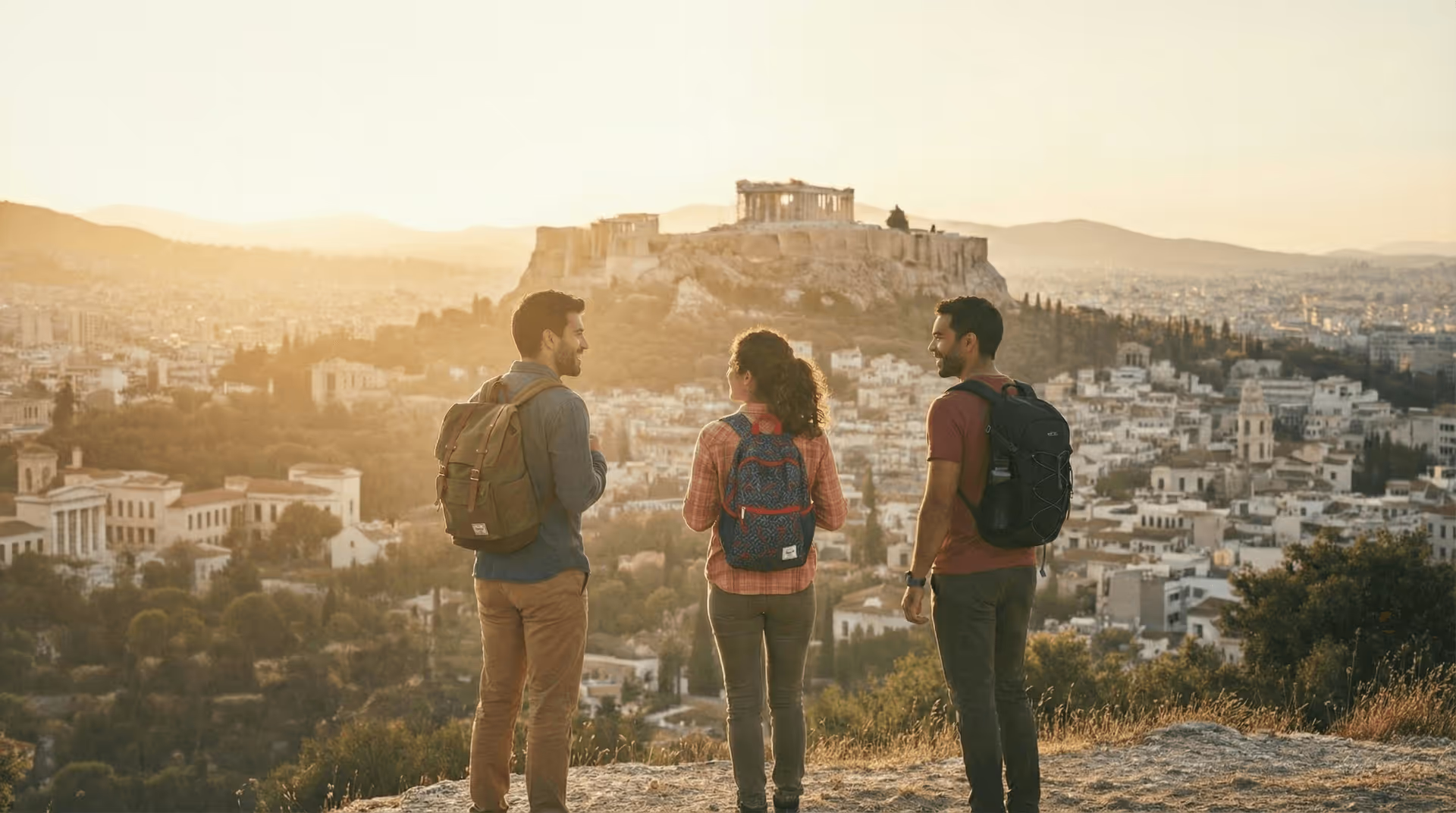
Local knowledge
12 Unique Things To Do in Athens
Beyond the Acropolis: the experiences, hidden spots, and local secrets that turn a good Athens trip into an unforgettable one.

Tour leader in Athens since 2010. 16 years walking these hills, 2,000+ guests from 40 countries.
Last updated: 23 March 2026
You're going to see the Acropolis. Obviously. Monastiraki Square, the Plaka, a museum or two. That's the Athens everyone does, and honestly, it's brilliant. But there's a whole other city underneath all that.
George has been leading Athens walking tours for 16 years now, and the things guests bring up months later in their reviews are almost never the postcard stuff. It's the sunrise they caught from a hilltop nobody told them about, or the tiny neighbourhood that felt like a Greek island, or the coffee they ordered the right way for once.
So here are 12 of those experiences. Some of them George includes on his walking tours. Others are just things worth knowing before you go. (If you're more into the nerdy history side, we've also got 18 fun facts about Athens that might be up your alley.)
Watch the Sunrise from Lycabettus Hill Summit
This one requires an early alarm. Painfully early. But it's worth it. Lycabettus Hill is 277 metres — the highest point in Athens — and at sunrise you'll have the summit practically to yourself. The Acropolis below you goes from grey to gold as the sun comes up. The Aegean's out there behind the city. The mountains ring the whole basin. There's maybe five other people up there with you, six on a busy day. Completely different experience to seeing it at midday with hundreds of others. (Also one of the best photo spots in Athens, for obvious reasons.)
George's Sunrise Hike takes you thereDiscover Anafiotika: A Cycladic Island in the City
There's a Cycladic island hiding on the Acropolis slopes. Seriously. Whitewashed walls, blue doors, bougainvillea everywhere — it looks like someone cut a piece out of Santorini and dropped it into central Athens. Workers from the island of Anafi built these houses in the 1840s when they came to help construct the Royal Palace, and about 40 of the original houses are still there. Narrow paths, cats sleeping in doorways, the whole thing. Most people walk right underneath it on their way to the Acropolis entrance and have no idea it's above them. It's one of those places that makes you feel like you've found something nobody else knows about.
Find the "Hidden Balcony" on Lycabettus
George won't tell anyone exactly where this is (it would ruin the whole point), but on the way down from Lycabettus summit there's a spot where you step off the main path and suddenly you're looking at the Acropolis from an angle you've never seen in any photo. No signpost, not on Google Maps, nothing in the guidebooks. He takes people there on the Conquer Lycabettus walk, and it's the one moment where everyone goes quiet and just stares for a bit.
Walk Through Athens' Street Art Galleries
This surprises people. Athens has a street art scene that rivals Berlin, and it's not just random tags — we're talking full building facades covered in murals by internationally recognised artists. Psyrri, Exarchia, Metaxourgeio. A lot of it started during the financial crisis as protest art and just kept going. Social commentary, surrealism, photorealism, some of it genuinely confronting. Walk through Exarchia with your eyes up. You'll stop every 30 seconds.
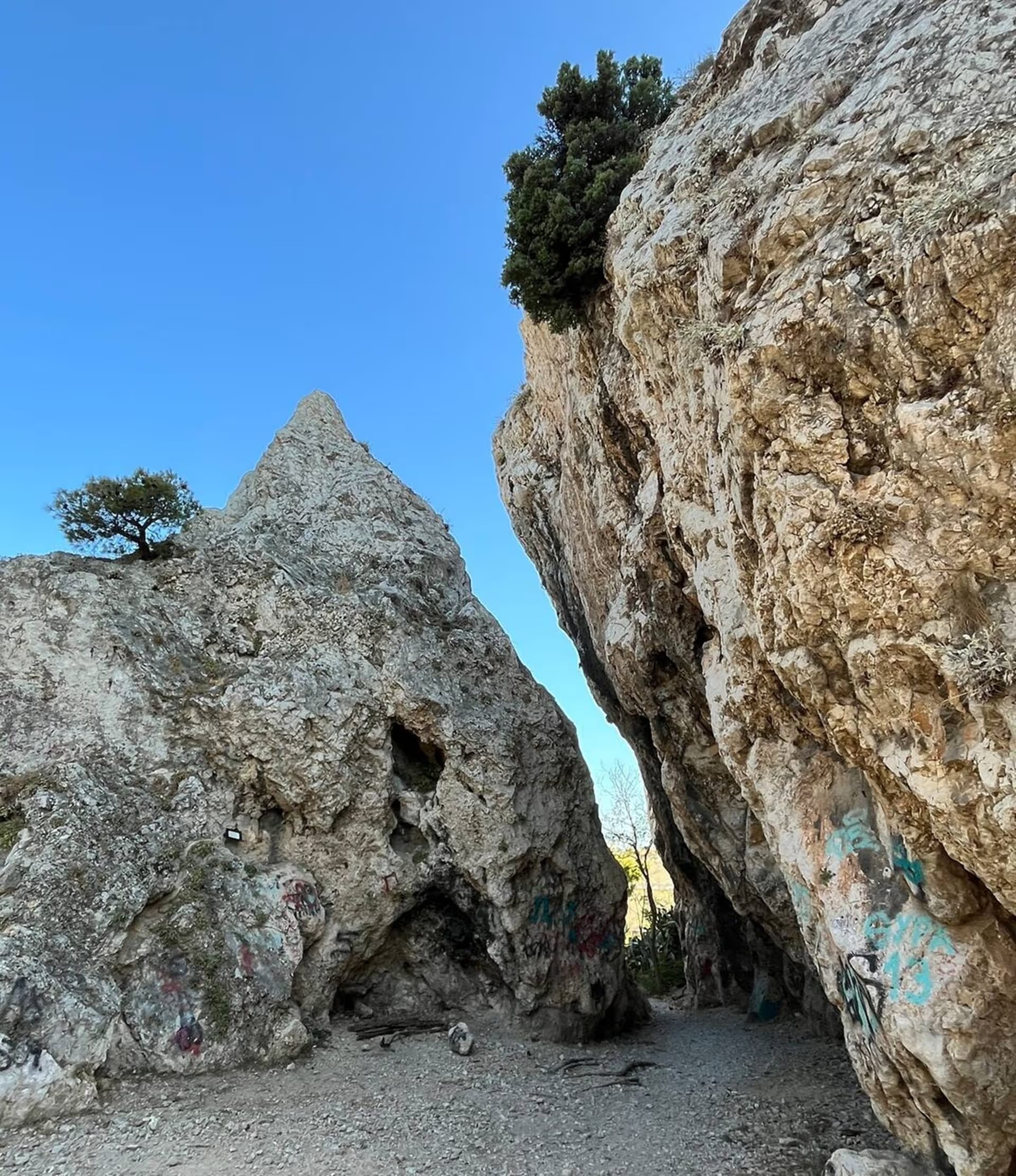
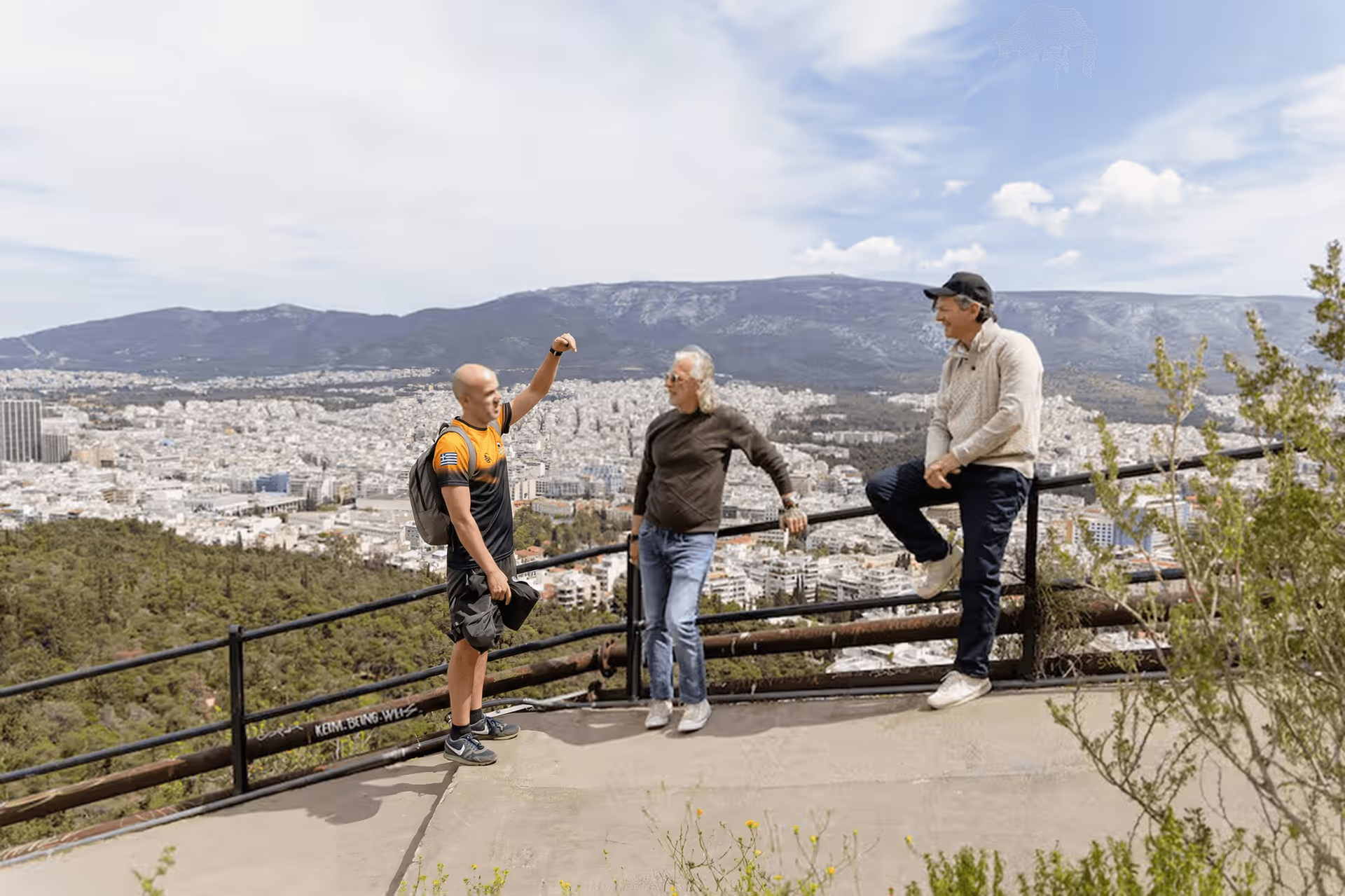
Left: Split Rock on Lycabettus Hill. Right: Scenic trails through Athens' hills most visitors never discover.
Climb Split Rock: Athens' Secret Climbing Spot
A massive boulder on the side of Lycabettus that looks like something cracked it clean in half. Local climbers have been using it for years but tourists don't know it exists. You don't need climbing gear — it's more of a scramble — and the setting is wild considering you're still technically in the middle of a city of 3 million people.
Explore Athens Central Market (Varvakios Agora)
Athinas Street. Follow the noise. The Central Market (Varvakios Agora) is the kind of place that overwhelms you for about 30 seconds and then you love it. Whole lambs hanging from hooks, fishmongers yelling prices, old guys arguing over saffron by the gram. Out the back there are these tiny restaurants where market workers eat tripe soup at six in the morning. It smells like a dozen things at once. Go before 10 AM or you'll miss the energy — by lunchtime it's winding down.
Watch Sunset from Philopappos Hill
Everyone piles onto Areopagus Hill (Mars Hill) for sunset. It's packed, people jostling for selfie angles, barely enough room to sit. Meanwhile, Philopappos Hill is a few minutes further and practically empty by comparison. You're at roughly the same height as the Acropolis itself, so you're looking straight across at the Parthenon as it turns gold. Much better. The Hills Climb passes right through here.
Drink Freddo Espresso Like an Athenian
If you order a "latte" or an "iced coffee" at a café in Athens, nobody will say anything, but you'll have marked yourself. The freddo espresso is the move. Double shot of espresso, shaken hard with ice until it gets this thick froth on top. It was invented in Greece and you can get one anywhere, but the good ones come from neighbourhood cafés in Koukaki or Pagrati or Kolonaki — not the tourist traps around Monastiraki. Say "freddo espresso sketo" for no sugar, or "me ligi" if you want a little. Then sit there for an hour. That's not laziness, that's how coffee works here. (And yes, the tap water in Athens is fine to drink, by the way.)
Walk the Pedestrianised Streets Around the Acropolis
Dionysiou Areopagitou and Apostolou Pavlou — two streets that loop around the south and west sides of the Acropolis, completely car-free. On one side you've got ancient ruins and the Acropolis looming above. On the other, neighbourhood life: people walking dogs, old men at café tables, the occasional stray cat. The walk connects Philopappos Hill to the Acropolis entrance and passes right by the ancient Agora. Do it early in the morning or around golden hour — the marble does something special in that light.
Find a Rooftop Bar with Acropolis Views
Half the rooftop bars in Monastiraki, Plaka, and Psyrri have direct Acropolis views. The Parthenon lit up at night, a cocktail in your hand, the buzz of the city below you — it's a bit of a cliché but it genuinely delivers. Go on a weeknight. Arrive half an hour before sunset. Ask your hotel which one they'd pick right now, because the scene shifts constantly — last year's hot spot might be half empty and somewhere new has taken over.
Eat Souvlaki Where the Locals Eat
You'll eat souvlaki in Athens. Everyone does. The question is where. If the menu is in English and someone's standing outside trying to wave you in, keep walking. Head into Koukaki, Pagrati, or Kypseli instead. You're looking for a small place, family-run, short menu, and ideally a queue of Greeks at the counter around lunchtime. The pita gets grilled to order. The meat comes straight off charcoal. The whole thing costs under €4. That's the souvlaki you'll be thinking about on the flight home. George has a full list of his favourite places to eat in Athens if you want specific names and addresses.
Hike the Hills Climb: Three Summits, One Morning
Three hills, one morning. Philopappos, Pnyx (where Athenian democracy was literally invented — citizens stood on that rock and voted), and Areopagus. George's Hills Climb strings them together into a single walk that covers more ground than most people manage in three days of sightseeing. You earn the views. You get the history from someone who actually knows it. And you'll burn off whatever you ate the night before, which at this point in your trip is probably a lot.

Why Athens Surprises Visitors
People come expecting ruins. They leave talking about the food, the rooftop bars, the street art, and the fact that you can hike to the highest point in the city and be back in a café with a freddo espresso before most tourists have left their hotel. Athens has changed a lot in the last ten years — the restaurant scene alone would justify a trip now.
But the thing nobody expects is the nature. Hills, trails, pine forests, viewpoints that genuinely compete with the islands. It doesn't look like that in the brochures, but it's there. George has spent 16 years showing people the side of Athens that doesn't make it into guidebooks, and it's usually the part they remember most.
Unique Athens FAQ
What are some unique things to do in Athens?
What are the best non-touristy things to do in Athens?
Is Athens worth visiting beyond the Acropolis?
How many days do you need in Athens?
What is the best area to explore in Athens?
Experience the Athens Tourists Miss
George's walking experiences cover the hilltops, hidden corners, and viewpoints on this list — and a few things he keeps off the internet entirely.
See what 2,000+ hikers say about their experience.