
Hidden gem
Philopappos Hill & The Pnyx Athens' Best Kept Secrets
Stunning Acropolis views, the birthplace of democracy, and peaceful trails without the crowds. The viewpoints most tourists never find.

Tour leader in Athens since 2010. 16 years walking these hills, 2,000+ guests from 40 countries.
Last updated: 24 March 2026
What is Philopappos Hill?
Philopappos Hill — the Hill of the Muses, locals call it — is a 147-metre hill southwest of the Acropolis. I bring every Hills Climb group here as the second peak, and I've watched hundreds of people react the same way when they reach the top. They go quiet. The Acropolis sits directly across the valley at eye level, and the Parthenon looks close enough to touch.
The hill gets its modern name from the Philopappos Monument at the summit — a marble tomb built in 116 AD for Gaius Julius Antiochus Epiphanes Philopappos, a Roman consul who loved Athens so much the city built him a monument facing the Parthenon. The facade is partially ruined now, but it's still impressive. I've always liked that a Syrian prince's monument has the best view of the Acropolis in the entire city.
What makes this hill special is the perspective. Most visitors see the Acropolis from below, craning their necks. Or from inside, where you can't actually see it. Philopappos gives you a face-to-face view across a narrow valley. The Parthenon appears to float. It's part of our walking tours in Athens for exactly this reason — and one of the most unique things to do in Athens.
What to See
Four things worth stopping for, spread across the hilltop. I'll walk you through them in the order you'll hit them on the trail.
Philopappos Monument
The 2nd-century AD marble tomb at the summit. Partially ruined, but the carved figures on the remaining facade are still sharp enough to make out. This is the spot for Acropolis sunset photos — I've shot thousands from here and the angle never gets old.
The Pnyx — Where Democracy Started
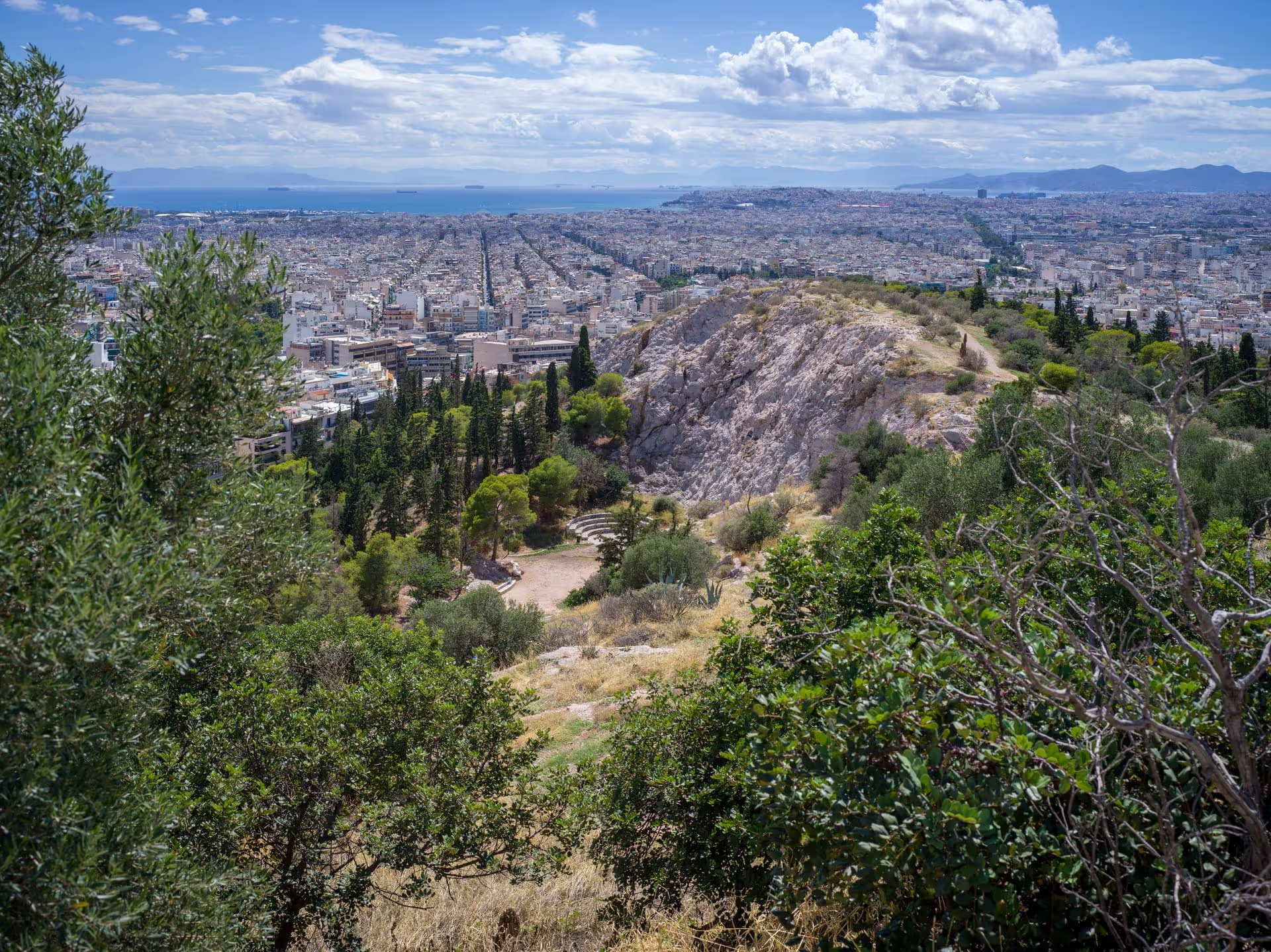
Right next door. Citizens gathered on this rocky slope from 508 BC to vote on laws. The stone speaker's platform (bema) is still there — Pericles, Themistocles, and Demosthenes all stood on it. I always ask groups to stand at the bema and look across at the Acropolis. You're seeing roughly what Pericles saw. That tends to shut people up for a moment.
Socrates' Prison
Rock-cut chambers on the northeast slope, traditionally identified as where Socrates was held before his execution in 399 BC. Historians argue about whether it's the real site. Doesn't matter much — standing in those cold stone rooms and thinking about what happened there is powerful either way.
Church of Agios Dimitrios Loumbardiaris
A tiny 16th-century church tucked into the pine trees halfway up the hill. The name means "the bombardier" — legend has it an Ottoman commander aimed his cannon at the church during a service, and divine intervention made the cannon explode instead. The church survived. So did the story. I pass it on every hike and it still makes me smile.
The Pnyx: Where 6,000 People Voted on a Hillside
The Pnyx doesn't look like much at first. A rocky slope. Some carved stone. A flat platform. Then I tell people what happened here and the whole thing shifts.
From 508 BC, Athenian citizens — up to 6,000 at a time — gathered on this hillside to debate policy and vote on laws. Not representatives. The actual citizens. Pericles stood at that stone platform and argued for building the Parthenon. Demosthenes warned Athens about Philip of Macedon from the same spot. This wasn't symbolic democracy. This was the real thing, happening outdoors, on rock, with the Acropolis watching from across the valley.
I've been bringing groups here for years and it still gives me a strange feeling. You stand at the bema, you look across at the Parthenon, and you realise you're standing where the idea that ordinary people should have a say in how they're governed first took physical form. No velvet ropes, no ticket office, no crowds. Just you and 2,500 years of history. It's one of Athens' truly off-the-beaten-path experiences.
If you want to understand how the Parthenon and Acropolis relate to each other, the Pnyx gives you the clearest view — both structures visible in full context from a single vantage point.
Why the Sunset View Here Beats Everything Else
I've watched the sun set from every hill in Athens. Philopappos wins. It's not even close.
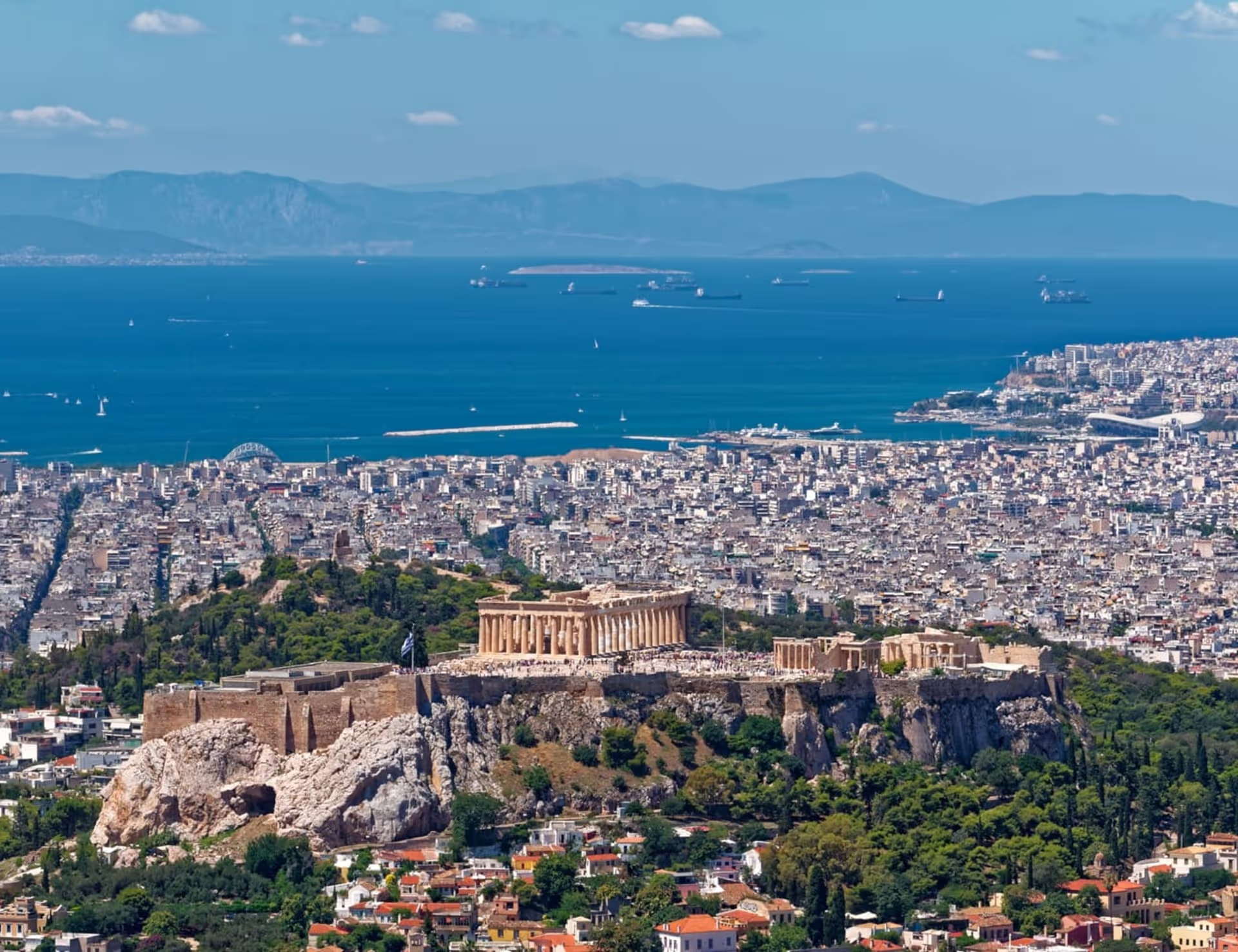
The difference is the angle. Lycabettus gives you a bird's-eye panorama from 277 metres — spectacular, but you're looking down. Philopappos sits at roughly the same height as the Acropolis, across a narrow valley. You're face to face with the Parthenon. When the sun drops behind you, the marble turns gold, then pink, then a deep amber. The whole western face lights up. I've seen it hundreds of times and I still stop walking to watch.
It's one of the best photo spots in Athens. Morning is good too — the first light catches the eastern columns while the city below is still waking up. But sunset is the main event. Beyond the Acropolis you'll see the Saronic Gulf, Piraeus port, and on clear days, Aegina island floating on the horizon.
Walking Route: Philopappos to Pnyx
The whole circuit — Philopappos monument, Pnyx, and back down — takes about 45 minutes to an hour if you don't rush. And you shouldn't rush. Every bend in the trail opens a new view.
Start from Dionysiou Areopagitou Street, the pedestrianised walkway south of the Acropolis. Follow the paved path uphill past the church of Loumbardiaris, then switch to the dirt trails that wind through pine trees toward the monument. From the summit, head north along the ridge to the Pnyx. The pine shade is thick here — in summer it drops the temperature by five degrees compared to the exposed streets below.
The route is gentle. A few short steep sections, but nothing that requires serious fitness. I've walked it with families, with people in their seventies, with groups still recovering from Lycabettus an hour earlier. Everyone makes it.
I include this area as the second peak on my Hills Climb — Lycabettus first for the adrenaline, then Philopappos for the views. If you're after Lycabettus on its own, the Conquer Lycabettus tour or the Sunrise Hike both cover it.
Best Views of the Acropolis from Philopappos
From up here, you can see both the Parthenon and the full Acropolis complex in a single frame. That perspective clicks something into place — you realise the Parthenon is one building on top of a fortified hilltop that includes half a dozen other ancient structures. From street level, or from inside the site, you don't get that.
No ticket. No queue. No €30 entry fee. Just a 20-minute walk and a view that's honestly better than what you get from inside. I've had people tell me this was more memorable than the Acropolis visit itself — and they'd paid and queued for that one.
For the full breakdown of viewpoints, our guide on the difference between the Parthenon and Acropolis covers every angle across Athens.
How to Get to Philopappos Hill
Philopappos Hill is easily accessible on foot from the Acropolis area. The main entrance is on Dionysiou Areopagitou Street, the pedestrianised walkway south of the Acropolis.
Nearest metro: Acropoli Station (Line 2, Red Line), a 5-minute walk to the hill's base.
On foot from Acropolis: If you're visiting the Acropolis, simply walk south along Dionysiou Areopagitou and follow signs to Philopappos Hill. The path is paved and gentle at first, then becomes a pleasant dirt trail.
As part of a walking experience: I include Philopappos as the second peak on the Hills Climb. After conquering Lycabettus, we descend through the city and climb Philopappos for a completely different perspective.
Philopappos Hill & Pnyx FAQ
How high is Philopappos Hill?
Is Philopappos Hill free to visit?
How long does it take to walk up Philopappos Hill?
What is the Pnyx?
When is the best time to visit Philopappos Hill?
Experience Philopappos Hill with George
Philopappos Hill is the second summit on George's Ultimate Hills Climb: two peaks, one unforgettable experience. See what past walkers say about the views.