
Local expert
Lycabettus Hill Athens The Ultimate Guide
Everything you need to know about the tallest peak in Athens, written by someone who has been climbing it for 17 years.

Tour leader in Athens since 2010. 16 years walking these hills, 2,000+ guests from 40 countries.
Last updated: 23 March 2026
At a glance
- ✓Lycabettus is the tallest point in central Athens (277m) with free, 24/7 access
- ✓The funicular costs around €13 return. Walking up takes 30-45 minutes.
- ✓Sunrise and sunset are the best times. Avoid midday in summer (40°C+).
- ✓The hidden "balcony" viewpoint and Split Rock are off the main path and worth finding
- ✓Orizontes restaurant at the summit does fine dining with full panoramic views
277m
Elevation
Free
Entry
360°
Views
24/7
Access
What is Lycabettus Hill?
Lycabettus Hill (also called Mount Lycabettus or Lykavittos in Greek) is the tallest point in central Athens at 277 metres above sea level. It is a limestone hill that towers over the city skyline, and on a clear day the views from the top stretch in every direction. You can see three mountain ranges, the islands of the Saronic Gulf, and all the way to the Peloponnese.
No other spot in Athens gives you this kind of perspective. The Acropolis, the Parthenon, the port of Piraeus, the mountains surrounding the city. It is all there in a single 360-degree panorama, and it is the reason Lycabettus remains the best vantage point for views of the Acropolis from above.
Greek mythology says the hill was created when Athena dropped a mountain she was carrying to fortify the Acropolis. A crow brought bad news and startled her, and she let it fall. The geological reality is less dramatic but still impressive. It is a massive chunk of Cretaceous limestone that has been sitting here watching over Athens for millions of years. (We have collected more stories like this in our fun facts about Athens guide.)
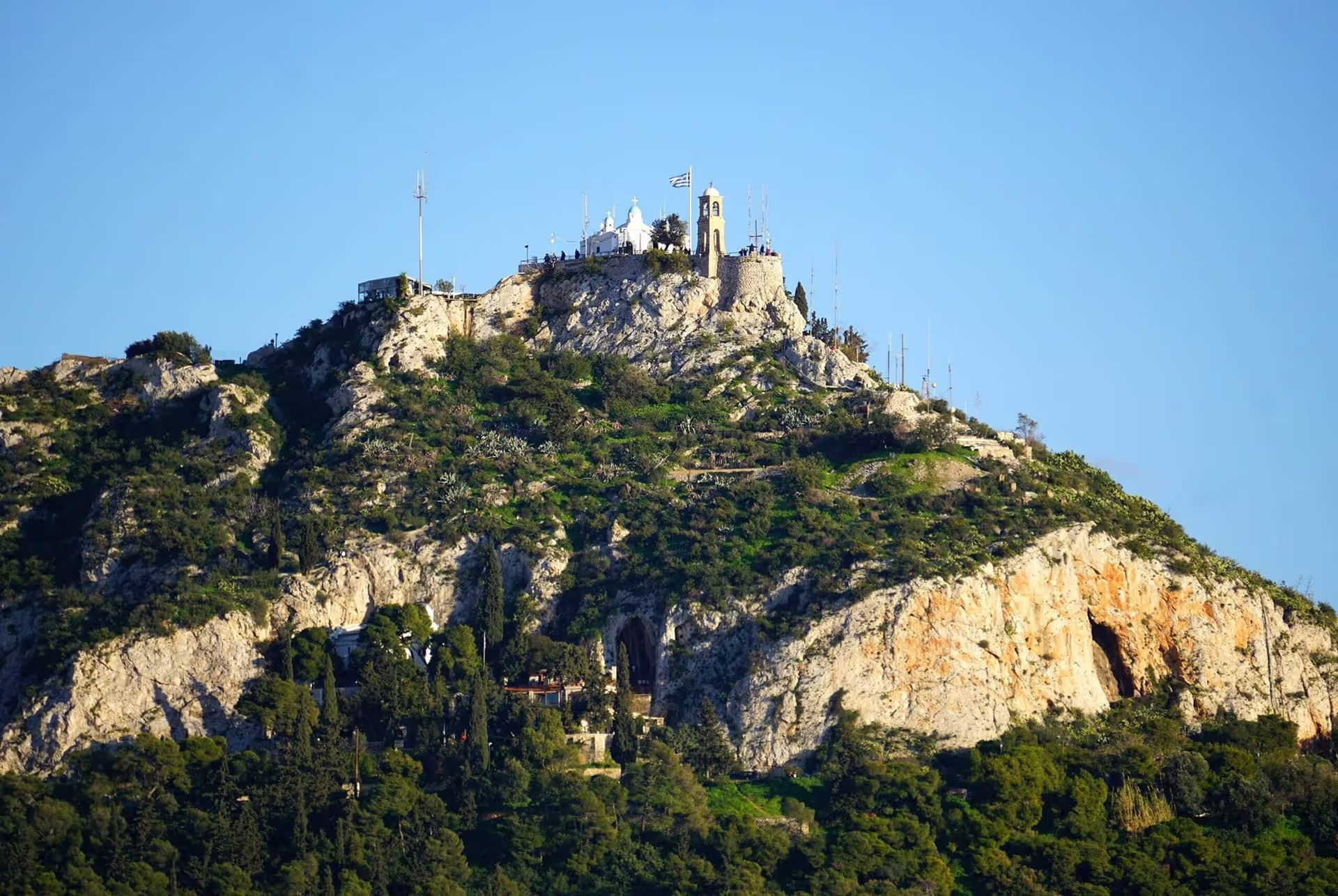
The View from the Top: Mountains, Islands and the Peloponnese
Most people expect a nice city view when they reach the summit of Lycabettus Hill. What they actually get is half of Greece laid out in front of them.
Athens sits in a basin surrounded by three major mountains, and you can see all of them from the top. Mount Ymittos (1,026 m) runs along the entire eastern horizon, a long ridge that separates the city from the Mesogeia plain. To the northeast is Mount Penteli (1,109 m), the ancient quarry where the marble for the Parthenon was cut. You can still see the white quarry scars on its slopes when the light is right. And to the north, Mount Parnitha (1,413 m) dominates the skyline with thick forest cover and, in winter, a dusting of snow. It is a strange thing to stand in the middle of a city of four million people and be staring at snow-capped mountains, but that is Athens for you.
Turn around and face south and the view changes completely. Past the port of Piraeus, the Saronic Gulf stretches out and you can clearly pick out the islands of Aegina, Agistri and Salamina. Their coastlines are easy to trace on most days. And behind those islands, on a really clear morning, there it is: the Peloponnese. Just a hazy outline on the horizon, but unmistakable once you know what you are looking at.
Then there is the city itself. Four million people spread out below you. The Acropolis sits to the southwest and from up here you can trace the layout of the ancient city, the Agora, Philopappos Hill, the Temple of Olympian Zeus, all of it visible like a map come to life. George covers all of this on his walks in Athens, pointing out landmarks and telling the stories behind them. If you want more on what makes this city so endlessly interesting, have a look at our fun facts about Athens.

How to Get to Lycabettus Hill
You have two options: the Lycabettus Funicular (cable car) from Kolonaki, which costs around €13 return and takes 5 minutes, or walking up one of three hiking routes, which takes 30-45 minutes depending on your pace and the route you choose. The funicular station is at Aristippou and Plutarchiou Streets, a short walk from Evangelismos Metro.
Lycabettus Hill Cable Car (Funicular)
The Lycabettus Funicular has been running since 1965. Most people just call it the cable car, and locals say teleferik. It departs from a station at the corner of Aristippou and Plutarchiou Streets in Kolonaki and takes about 5 minutes to reach the summit through a tunnel cut into the hillside. There are no views during the ride itself, but what is waiting at the top more than makes up for it.
Each cabin holds up to 30 passengers and there are two cars running simultaneously in opposite directions on a single track with a passing loop in the middle. Departures are roughly every 30 minutes, though in busy periods they run as often as every 10 minutes.
How to Find the Station
From Evangelismos Metro (Blue Line), walk up Marasli Street until you hit Aristippou and turn left. Look for the "Teleferik" sign at the entrance. A taxi from the centre of Athens costs about €5 and takes 5 to 10 minutes.
Ticket Prices
Return: ~€13 / One-way: ~€10
Not cheap, but the summit views make it worthwhile
Operating Hours
Daily: 8:30 AM to 2:30 AM (summer)
Shorter hours in winter; may close for maintenance
Is it worth it? Honestly, it depends. The ride goes through a tunnel with a music and light show, so it is not scenic. You step out at the top having missed the trails, the wildlife, Split Rock, all the hidden viewpoints. If you are able-bodied, the best option is to hike up and take the funicular down. You get the full experience on the way up and save your knees on the way down. For a night visit though, the funicular is the obvious choice because the illuminated Acropolis and city lights from the summit after dark are genuinely stunning. And if you have mobility issues, it is a great way to still get the summit views.

On Foot (Recommended)
There are multiple hiking trails to the summit from different sides of the hill. Walking up is how you actually experience Lycabettus properly. The pine forests, the rock formations, the views getting better with every turn. You miss all of that if you take the funicular. See our detailed hiking routes below.
Nearest Metro
Evangelismos Station (Line 3, Blue Line) is the closest metro stop. From there it is about a 15 to 20 minute walk to where the main hiking trails start.
Hiking Routes on Lycabettus Hill
Three main approaches to the summit, each with a different character. Wear shoes with decent grip because the trails are loose and uneven in places. And bring water, especially in summer when it gets extremely hot.
Kolonaki Side (Aristippou Street)
This is the most popular route and the best maintained. A paved path winds up through the pine trees from near the funicular station. There are steps and gentle switchbacks, so it is manageable for most fitness levels. Allow 30 to 40 minutes to reach the top.
Neapoli Side (North Approach)
Quieter and more rugged than Kolonaki. You walk through residential streets in the Neapoli neighbourhood before reaching the trailhead, then the path gets narrower with rocky sections and steeper gradients. This is the side where you can access Split Rock. Allow 35 to 45 minutes.
Strefi Hill Approach
This is George's favourite way up. You start at Strefi Hill in the Exarcheia neighbourhood, cross over, and come at Lycabettus from the west. Hardly anyone uses this trail. It feels properly wild, with exposed rock, scrubby vegetation, and views that open up gradually as you gain elevation. There is some light scrambling involved. Allow 45 to 60 minutes. This is the route featured on the Conquer Lycabettus tour.
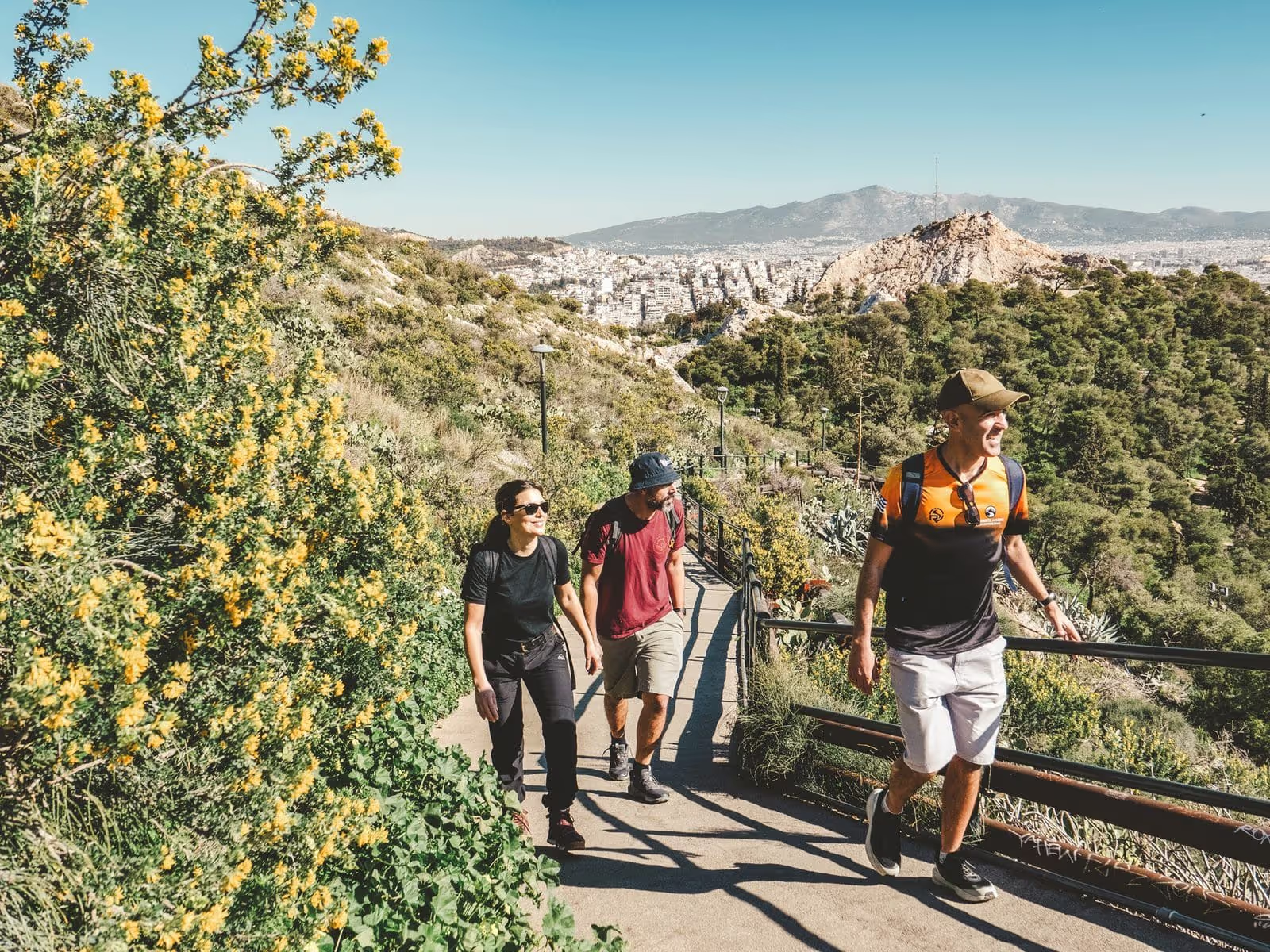
Want someone who knows every trail, every shortcut, every hidden viewpoint on this hill? George's Conquer Lycabettus tour covers the best of all three routes. And if you like getting off the beaten path in Athens, the Strefi Hill approach is the one for you.
What to See on Lycabettus Hill
The summit has the whitewashed Chapel of St. George, a 360-degree viewing platform, and the Orizontes fine dining restaurant. On the hillside you'll find Split Rock (a hidden bouldering spot), pine forest trails, the open-air Lycabettus Theatre, and the hidden "balcony" viewpoint that gives the most unusual Acropolis angle in Athens.
The Summit & Chapel of St. George
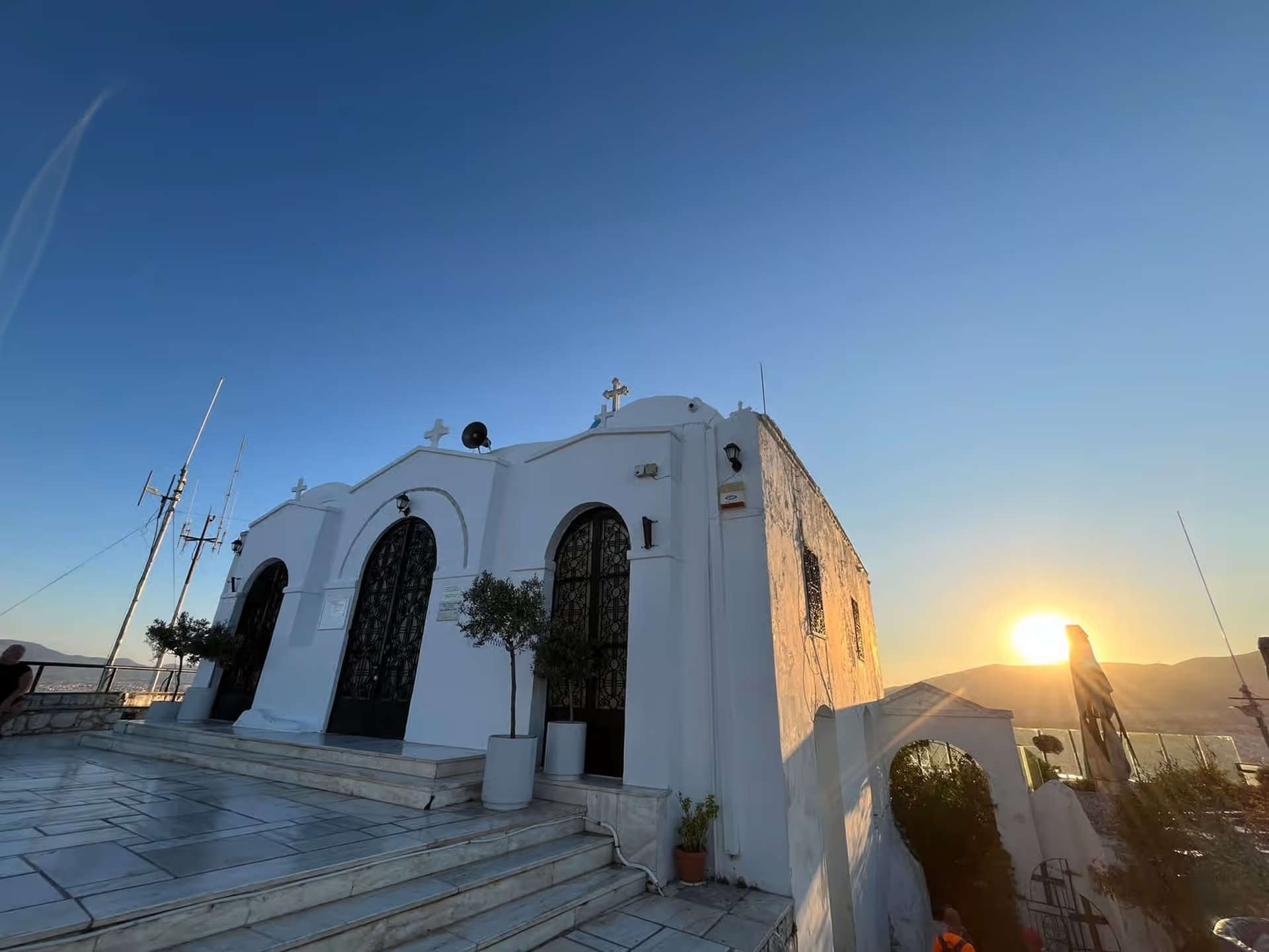
Right at the top of Lycabettus Hill sits the whitewashed Chapel of Agios Georgios (St. George). It was built in the 19th century on the foundations of an older Byzantine chapel, and it is a surprisingly peaceful place given the panorama just outside the door. Inside you will find a barrel-vaulted ceiling, walls lined with icons, and a quiet atmosphere that feels a world away from the city below.
The chapel celebrates the feast day of St. George on 23 April each year. It draws a big crowd of worshippers who make the climb for a special liturgy. Weddings are held here too. Not a bad place to get married, with all of Athens stretched out beneath you.
Here is something most people do not know: there used to be a cannon fired from near the chapel at noon every day, and Athenians would set their watches by it. That tradition stopped a long time ago, but the summit platform is still there, still offering the same unobstructed views in every direction. Mountains to the north, islands to the south, the entire city in between. And while Lycabettus gives you the bird's-eye view, Philopappos Hill gives you something completely different: a face-to-face encounter with the Acropolis at eye level.
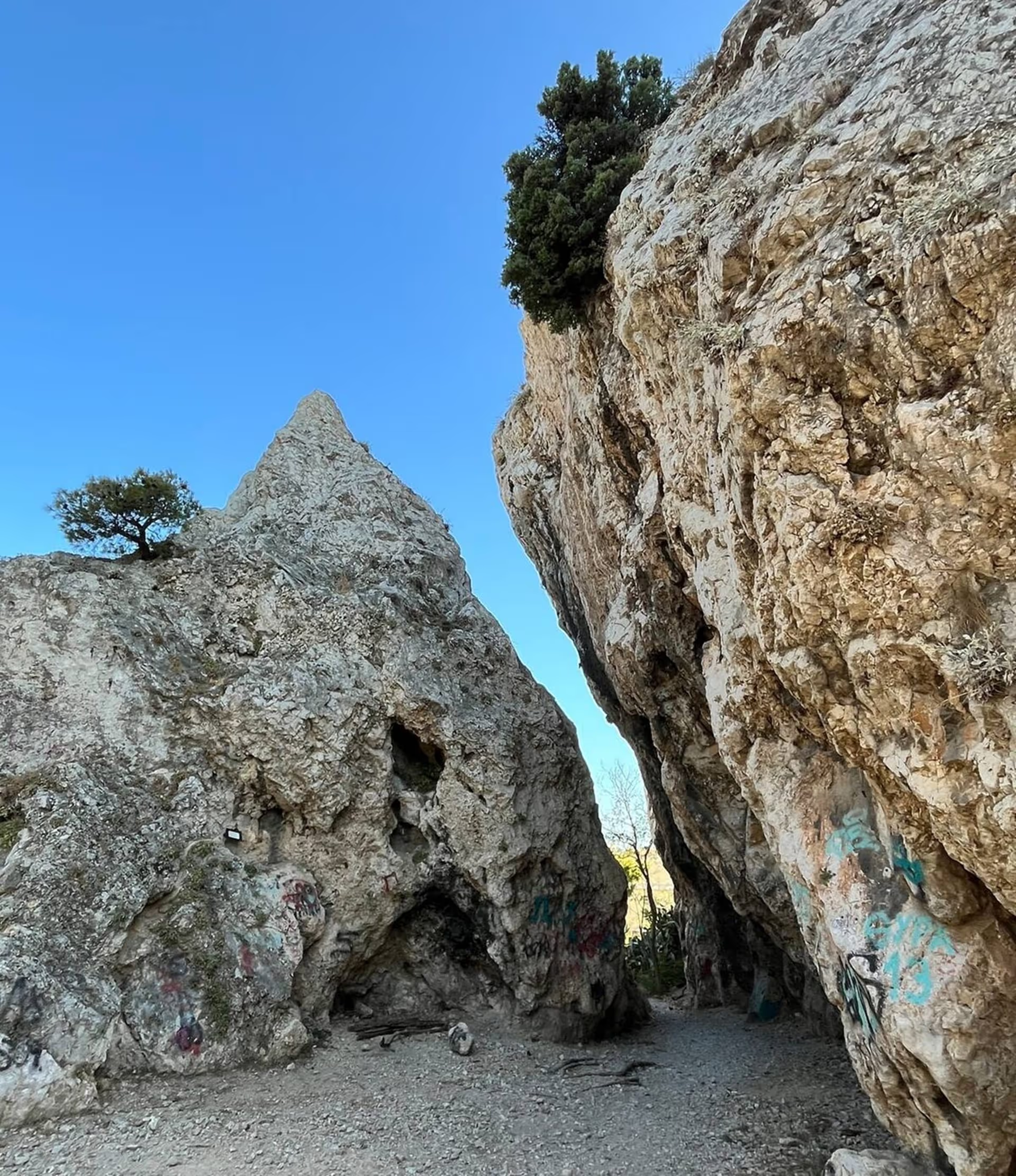
Split Rock
One of the best-kept secrets on Lycabettus. Split Rock is a dramatic rock formation on the hillside that local climbers use for bouldering practice. The vast majority of visitors walk straight past without ever realising it is there. George considers it one of the highlights of his walking experiences, and once you see it you understand why.
The Hidden Balcony
Coming down from the summit there is a lookout point that is not on any map and not signposted anywhere. A lot of people who know the hill well consider it the single most unique view of the Acropolis in all of Athens. It is completely unknown to most tourists. George includes this stop on his Conquer Lycabettus tour, and the reaction from visitors when they see the view never gets old.
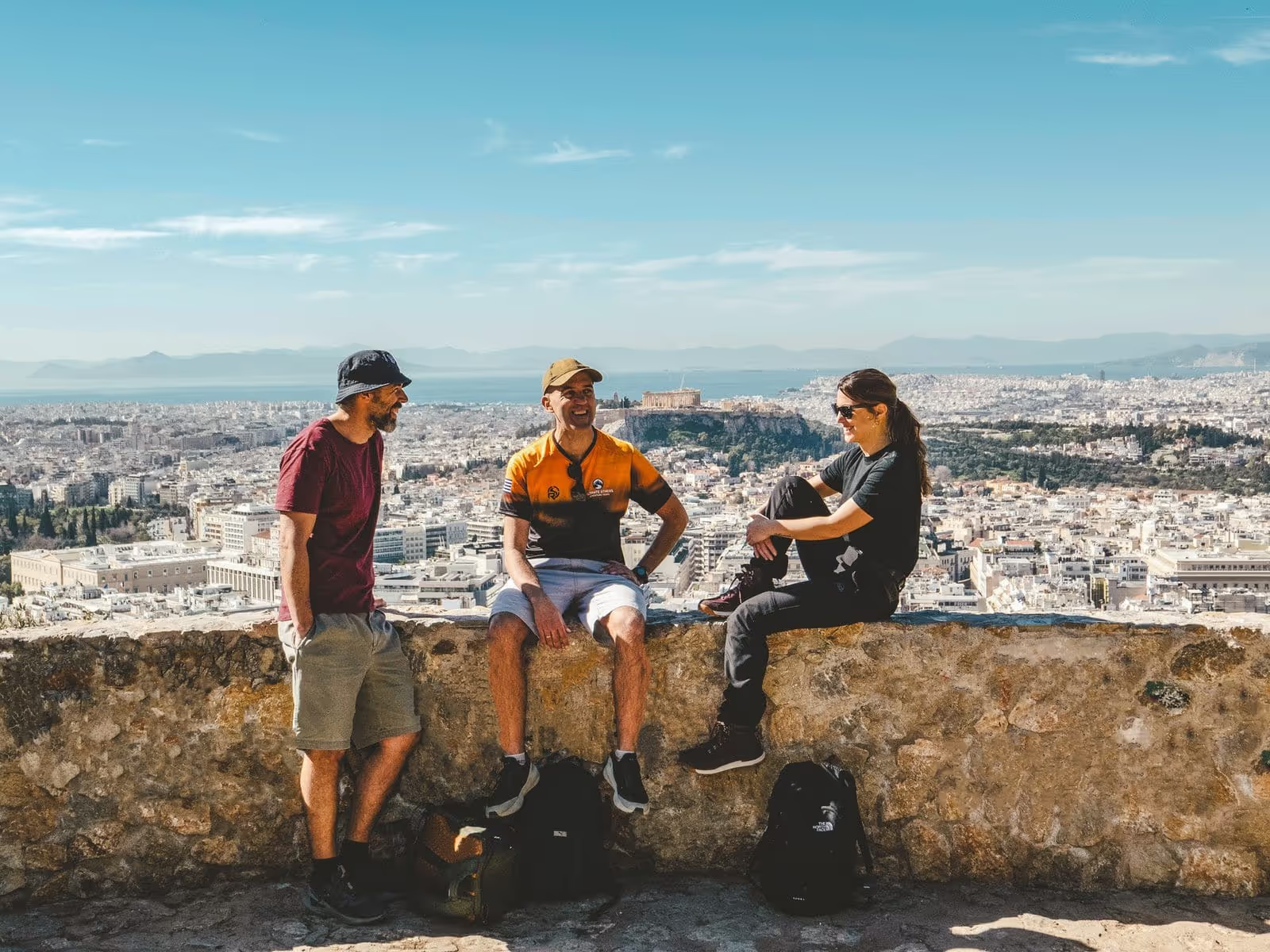
Want to See the Hidden Side of Lycabettus?
George's walking tours take you to Split Rock, secret viewpoints, and trails that 99% of visitors never find.
Lycabettus Theatre
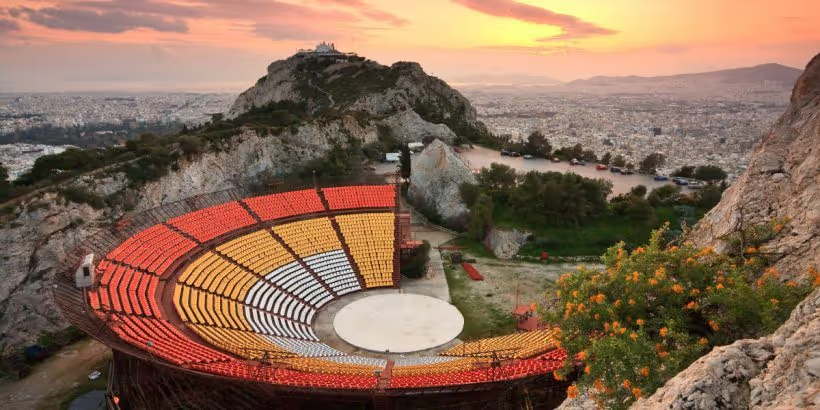
The open-air Lycabettus Theatre is carved directly into the northeastern slope of the hill. It holds around 3,000 people and has the Athens skyline as a natural backdrop. The season runs from May through October, with a mix of concerts, theatre, dance, and cultural events.
Over the years the theatre has hosted some serious names. Bob Dylan, Sting, Arctic Monkeys, Leonard Cohen, Patti Smith, and a long list of Greek artists have all played here. There is something about seeing live music outdoors on a hilltop, with Athens lit up below you and warm air coming off the city. It stays with you.
Getting tickets: Check the theatre's official channels and the big Greek ticketing platforms. The popular shows sell out fast, so keep an eye on announcements in April and May when the summer programme is released.
George's tip: If a show is sold out, there is a trail that runs above the theatre where you can sit on the rocks and hear the music floating up. It is not the same as being inside, obviously. But on a warm summer night with Athens glowing below you, it is pretty special in its own right. You could hike up at sunset beforehand and make a whole evening of it. See our guide to unique things to do in Athens for more ideas like this.
Orizontes Restaurant: Dining at the Summit
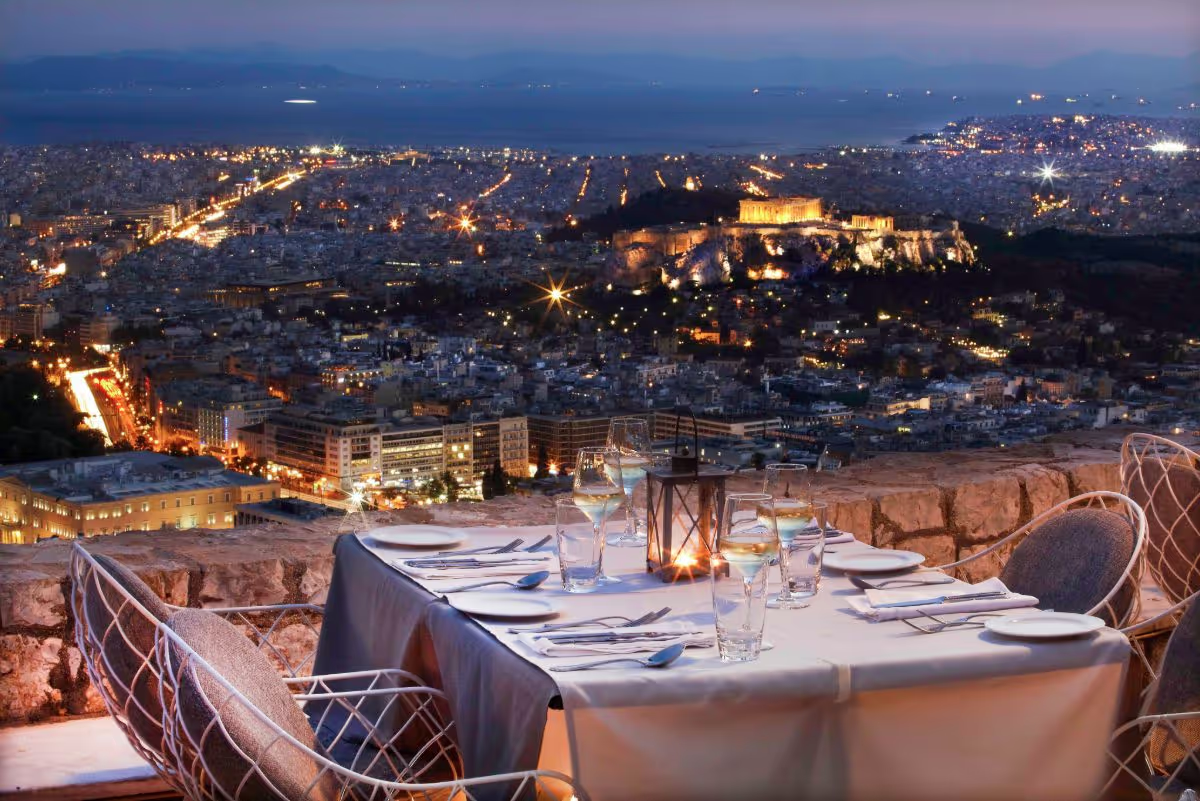
Orizontes (the name means "Horizons" in Greek) sits right at the top of Lycabettus Hill. It is one of the most well-known fine dining restaurants in Athens, and the reason is obvious when you sit down. Every table looks out over the Acropolis, the Saronic Gulf, and the sprawl of the city below. There is nothing else like it.
The food is modern Mediterranean with a Greek focus. Fresh seafood, good meats, seasonal vegetables, and a wine list that covers both Greek and international labels. It is not cheap. But for a special occasion, or if you just want one memorable dinner in Athens, it is hard to beat the combination of food and setting.
Booking advice: Reserve well ahead of time. The sunset tables on the western terrace are the ones everyone wants, and they go quickly. Ask for an outdoor table when you call. Dress code is smart casual.
The best way to do it: Hike up via one of the trails in the late afternoon, have dinner at Orizontes as the sun goes down, then take the funicular back to Kolonaki afterwards. You get the adventure and the luxury in one evening.
Sunset on Lycabettus Hill
If you only do one thing on Lycabettus Hill, make it sunset. The sun drops towards the Saronic Gulf and the whole city goes golden. The Acropolis lights up like it is glowing from inside, and then the afterglow kicks in. The sky turns pink, then purple, then deep blue, and by then the city lights are starting to come on below. It is genuinely one of the best things you can do in Athens.
Best months: May through September for clear skies and warm evenings. October is underrated, with smaller crowds and sometimes dramatic cloud formations. Winter sunsets happen earlier (around 5:30 PM) but on a clear day they can be just as good.
Where to stand: The summit platform next to the Chapel of St. George is where most people go, and it does get crowded. If you want more space, the rocks on the western slope just below the summit are a better bet. The flat rock area near the Orizontes terrace works well too.
Beating the crowds: Get there at least 30 minutes before sunset if you want a decent spot. Weekends in summer are the busiest. Tuesday and Wednesday evenings tend to be much quieter.
For photographers: A wide-angle lens is useful here. The money shot is the Acropolis against the sunset sky. Face southeast from the summit for that angle. We have more ideas in our guide to the best photo spots in Athens.
Or skip the crowds entirely and see Athens wake up instead. George's Sunrise Hike gets you to the summit before dawn. Same views, a fraction of the people.
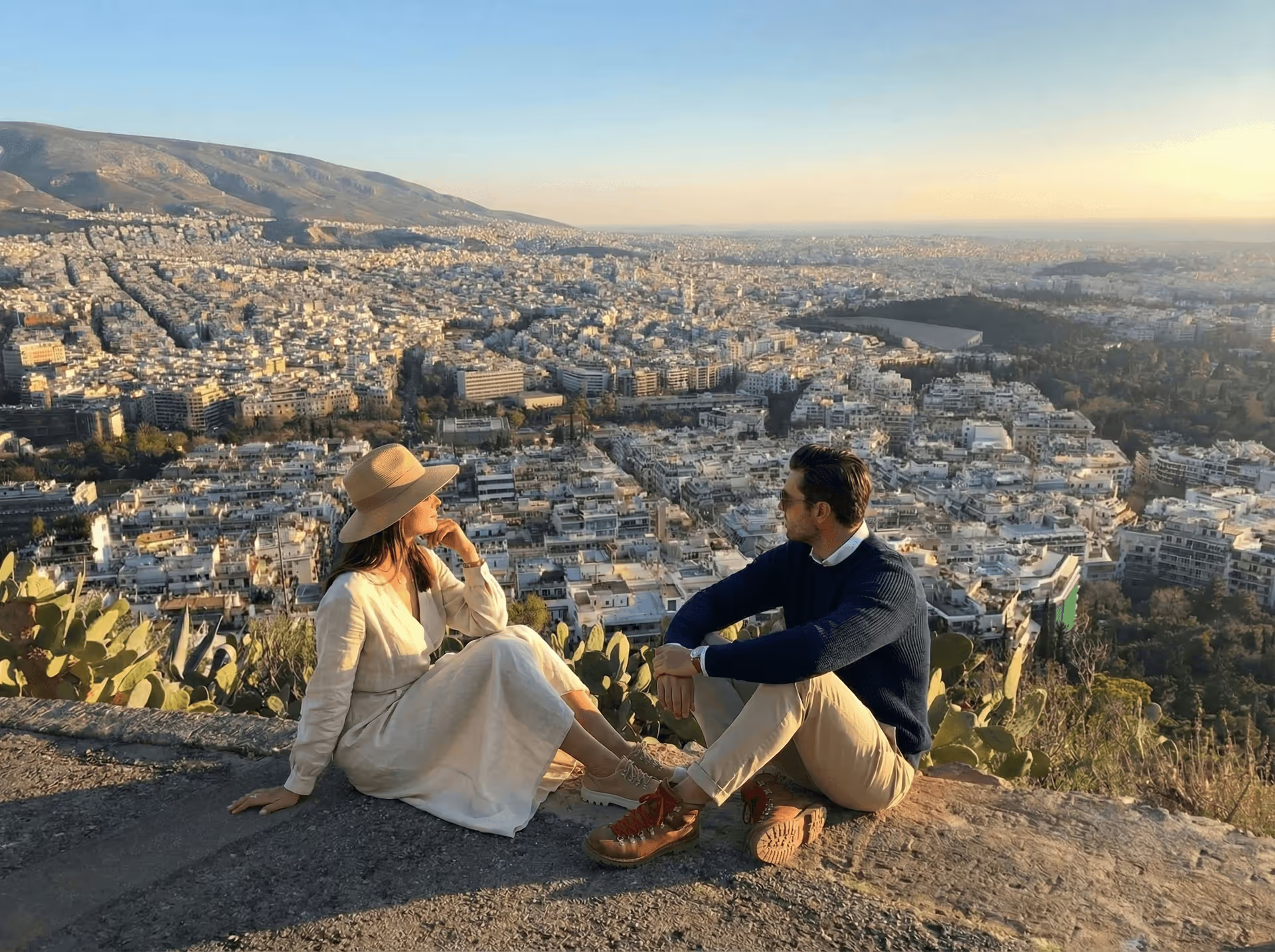
Best Times to Visit Lycabettus Hill
Sunrise is the best time, with almost nobody else on the summit and golden light over the Aegean. Early morning (before 9 AM) is a close second. Avoid midday in summer entirely: temperatures regularly exceed 40°C and there's almost no shade above the tree line. Sunset is popular but busier.
Sunrise
The best time to be up there, no question. Watching Athens wake up as the sun comes over the Aegean is something you will not forget. Summer sunrise is around 6:00 AM, winter closer to 7:30 AM. George runs dedicated sunrise hikes year-round.
Early Morning
Get there before 9 AM in any season and you will pretty much have the trails to yourself. The air is cooler, the light is better for photos, and the city has not properly woken up yet. Great for photography, actually. See our guide to the best photo spots in Athens.
Avoid: Midday Summer
Seriously, do not do this to yourself. Temperatures push past 40°C and there is almost no shade once you leave the lower tree line. If you absolutely have to go, bring lots of water, a hat, and sunscreen. But morning or evening is just so much better. Read our guide to staying hydrated in Athens.
Lycabettus Hill FAQ
How high is Lycabettus Hill?
How long does it take to hike Lycabettus Hill?
Is the Lycabettus cable car running?
How much does the Lycabettus funicular cost?
What is the best time to visit Lycabettus Hill?
Is Lycabettus Hill free to visit?
What events are held at Lycabettus Theatre?
Can you eat at the top of Lycabettus Hill?
What landmarks can you see from Lycabettus Hill?
Is there a funicular to the top?
Explore Lycabettus Hill with George
The hidden trails, secret viewpoints, and stories that no guidebook covers. George has been hiking this hill for 17 years and he knows every corner of it.
See what 2,000+ hikers say about their experience.