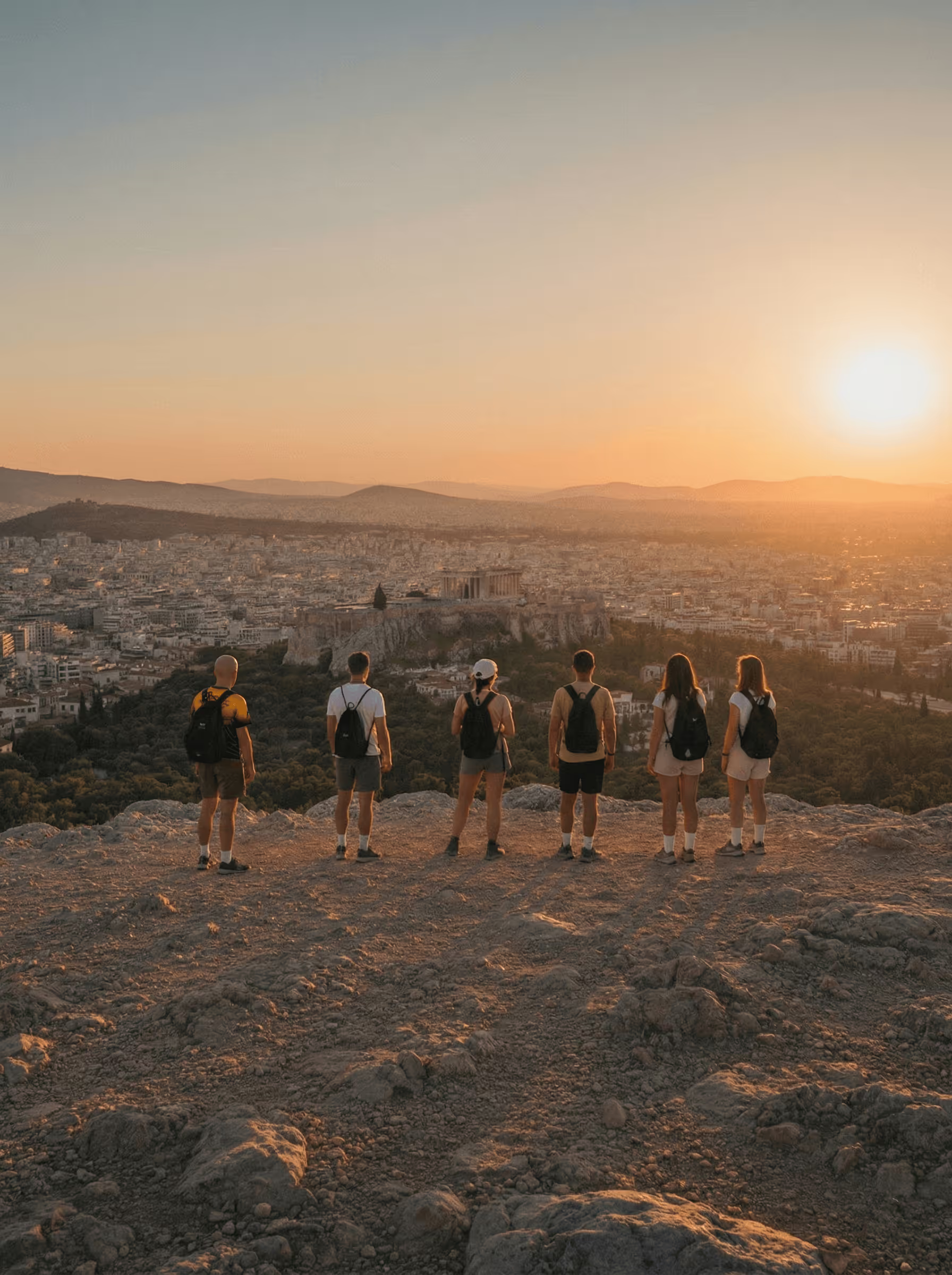
Local knowledge
Fun Facts About Athens That Most Visitors Miss
18 surprising things about Athens, from ancient secrets to modern quirks, straight from someone who's walked these streets for over 16 years.

Tour leader in Athens since 2010. 16 years walking these hills, 2,000+ guests from 40 countries.
Last updated: 24 March 2026
TL;DR:
- Athens has been lived in for 5,000+ years straight — it never stopped being a city
- The Parthenon was painted bright red, blue and gold. The white marble look is just old paint wearing off
- You can see the Aegean Sea from the city centre if you know where to stand
- Dinner before 10pm marks you as a tourist. Locals eat late
- Most of these facts have a physical spot you can visit — I'll tell you where
I've been hiking Athens' hills and back streets for 16 years now. You'd think I'd run out of things that surprise me. I haven't. Last month I found a Roman cistern I'd walked over hundreds of times without knowing it was there. That's Athens — 5,000 years of history stacked on top of each other, and you keep tripping over new layers.
These are 18 things I share with people on my walking tours in Athens. Not the stuff you'll read on the first page of a guidebook. The details that come up when we're catching our breath halfway up Lycabettus Hill and someone asks a question I haven't heard before.
Ancient history
1. People Have Lived Here for 5,000 Years. Without a Break.
Athens has been continuously inhabited since roughly 3000 BC. Think about that. Babylon fell. Rome fell. Carthage was literally salted into the ground. Athens just... kept going. People were living on the Acropolis rock before the pyramids at Giza existed. When you walk through Plaka today, those narrow streets have had foot traffic for millennia. Different shoes, same paths.
2. You Can Stand Where Democracy Was Born
Not in a museum. On the actual rock. In 508 BC, Cleisthenes introduced demokratia and citizens gathered on the Pnyx, a rocky slope facing the Acropolis, to vote on laws. I take groups there on the Hills Climb. You stand at the bema — the speaker's platform — and you're looking at roughly the same view Pericles had when he addressed the assembly. Most people walk straight past it without realising what it is.
3. The Parthenon Was Never White
I love watching people's faces when I tell them this one. Those bleached marble columns? In 440 BC they were painted bright red, deep blue, and covered in gold leaf. The Parthenon looked more like a decorated temple in Bali than the sterile white ruin we see now. Ancient Greeks were mad for colour. What we think of as "classical Greek aesthetic" is just 2,500 years of weather stripping the paint off.
4. Athens Has the Only All-Marble Stadium on Earth
The Panathenaic Stadium — Kallimarmaro, locals call it, which literally means "beautiful marble" — is built entirely from Pentelic marble. Same stone as the Parthenon. Athens hosted the Panathenaic Games here for centuries, then the first modern Olympics in 1896, and again in 2004. I ran the Athens Marathon in 2019 and finished inside it. 50,000 seats of white marble, and you cross the line where Olympic athletes stood 128 years ago. Unreal feeling.
5. There's a Sacred Olive Tree on the Acropolis (and It Matters)
The story goes that Athena and Poseidon both wanted to be patron god of the city. Poseidon smashed his trident into the rock and produced a saltwater spring. Athena planted an olive tree. The citizens chose the tree — peace and food over a salty puddle. Smart pick. They named the city after her. There's still an olive tree growing on the Acropolis grounds in the exact spot where Athena's was supposed to have stood. It's a descendant of the original, replanted after the Persians burned it in 480 BC.
6. Every Film You've Watched Traces Back to One Amphitheatre Here
The Theatre of Dionysus sits on the southern slope of the Acropolis. Seats 17,000. Built around 500 BC. Aeschylus, Sophocles, Euripides — they all premiered their plays right there. Drama as an art form was invented in that semicircle of stone. Every film, every TV show, every stage play? The whole concept of telling a story to an audience sitting in tiered rows started on that hillside. You can sit in those seats today. Most tourists walk right past on their way to the Parthenon.
Geography & nature
7. Athens Is Surrounded by Hills (Not Just the Acropolis)
Ask most visitors to name an Athens hill and they'll say the Acropolis. Maybe Lycabettus if they've done some research. But the city is ringed by them. Philopappos Hill faces the Acropolis directly. The Pnyx, Areopagus, Strefi Hill, the Tourkovounia range — all inside the urban area. I count at least eight significant hills within walking distance of the centre. It's why my walking experiences work so well. You're always climbing toward a view that nobody on a bus tour will ever see.
8. You Can See the Aegean Sea from the Centre of Athens
This one surprises everyone. From the Lycabettus summit on a clear morning, you can see Piraeus port, the Saronic Gulf, and islands floating out on the Aegean. Athens is a coastal city — the beach is 25 minutes from Syntagma Square by tram. But at street level you'd never know. You have to get above the roofline to see it, which is exactly what happens on our hikes.
9. 250+ Days of Sunshine a Year. Yes, Really.
Coming from Melbourne, I thought I knew sunshine. Athens makes Melbourne look overcast. Over 250 sunny days a year, with summers regularly pushing past 40°C. Winters are mild — 10-15°C most days, rarely below 5°C. That's why I run sunrise hikes year-round. The morning air is cool, the light is golden, and by the time we're back down the city is just waking up.
10. Athena Dropped Lycabettus Hill (Literally)
The myth: Athena was carrying a giant rock to fortify the Acropolis. A crow flew up with bad news. She was so startled she dropped it. That rock became Lycabettus Hill — 277 metres of limestone sticking straight up from the flat city basin. I tell this story at the start of every Lycabettus hike. Geologists have a less dramatic explanation involving tectonic uplift, but standing at the base looking up, the dropped-rock story honestly feels more plausible.

Modern Athens
11. The Street Art Came from the Crisis
During the economic crisis of the 2010s, Athens' walls became canvases. Psyrri, Exarchia, Metaxourgeio — entire neighbourhoods covered in murals. Some of it was rage. Some of it was beauty. A lot of it was both at once. The crisis passed but the art stayed, and now it's a genuine part of what makes Athens feel alive. Walk through Psyrri on a Sunday morning and every laneway has something worth stopping for. If you want to photograph it, here's our guide to the best photo spots in Athens.
12. Every Greek Family Has an Olive Oil Source
Greece uses more olive oil per person than anywhere else — roughly 12 litres per head, per year. But here's what the statistics don't tell you. Almost every family I know in Athens has a connection to a village. An uncle's grove in the Peloponnese. A cousin's trees on Crete. They call it their horafi. Once a year, usually November, the oil arrives in big metal tins. My partner's family gets theirs from Kalamata. Nobody I know buys supermarket olive oil. It goes on everything. Bread, salads, grilled fish, even drizzled on feta for breakfast.
13. The Metro Doubles as an Archaeological Museum
When they dug the Athens metro in the 1990s and 2000s, they found over 50,000 artefacts. Fifty thousand. Ancient graves, pottery, wells, entire sections of Roman road. They couldn't just bury it all again. So stations like Syntagma have glass display cases built into the walls showing cross-sections of archaeological layers. You're waiting for the train and you're staring at a 2,000-year-old water well three metres from the platform. It's probably the only commute in the world that counts as a museum visit.
14. The Tap Water Comes from a Marble Dam
Athens' tap water is clean and genuinely good. It comes from Lake Marathon, a reservoir behind a dam built between 1926 and 1931 — and the dam's exterior is faced with Pentelic marble. Same marble as the Parthenon. The Greeks built a utilitarian water dam and clad it in the same stone they used for their greatest temple. That tells you something about this city's relationship with aesthetics. Drink from the tap. Skip the bottled water.
Food & culture
15. Coffee Here Takes Two Hours. Minimum.
When I first moved from Melbourne to Athens, I ordered a coffee and tried to drink it in 10 minutes like a normal person. The waiter looked at me like I'd committed a crime. Greeks don't rush coffee. A freddo espresso or a frappe is a two-hour commitment. Chairs face the street. Conversations drift. Nobody — and I mean nobody — asks you to free up the table. After 21 years here I've fully converted. Trying to have a quick coffee in Athens feels wrong.
16. The Souvlaki Debate Will Never Be Settled
Ask an Athenian what "souvlaki" means and you'll get a passionate answer. Ask a second Athenian and you'll get a different passionate answer. Is it the meat on the skewer? Or the whole wrapped pita with tzatziki, tomatoes, onions, and chips? In Athens, the pita wrap is the souvlaki. In Thessaloniki, they'll fight you on that. The only thing everyone agrees on: the best places are tiny, family-run, far from Monastiraki Square, and the meat should be straight off the charcoal. My go-to is Kostas in Syntagma. Been there since the 1950s. No menu, no seats. Just queue and eat.
17. There's a Cycladic Island Village Hidden on the Acropolis
Tucked against the north face of the Acropolis rock, Anafiotika looks like it belongs on Santorini. Whitewashed walls, blue shutters, bougainvillea spilling over narrow paths. In the 1840s, builders from the tiny island of Anafi came to Athens for construction work and built their homes the only way they knew — island style. The neighbourhood is still there, still lived in, and most tourists walk straight past the entrance without clocking it. It's one of those hidden corners of Athens that rewards the curious.
18. Dinner at 7pm? You'll Be Eating Alone.
This catches every visitor off guard. Athenians don't eat dinner until 10pm. In summer, closer to 11. Rock up at a taverna at 7pm and it'll be you and the staff setting up. I remember my first year here, sitting alone in restaurants wondering if I'd picked a dud. Nope — I was just three hours early. Book for 9:30pm if you want atmosphere. The kitchen hits its stride around 10, the wine starts flowing, and nobody asks for the bill until you wave someone down. Dinner in Athens isn't a meal. It's the main event of the evening.
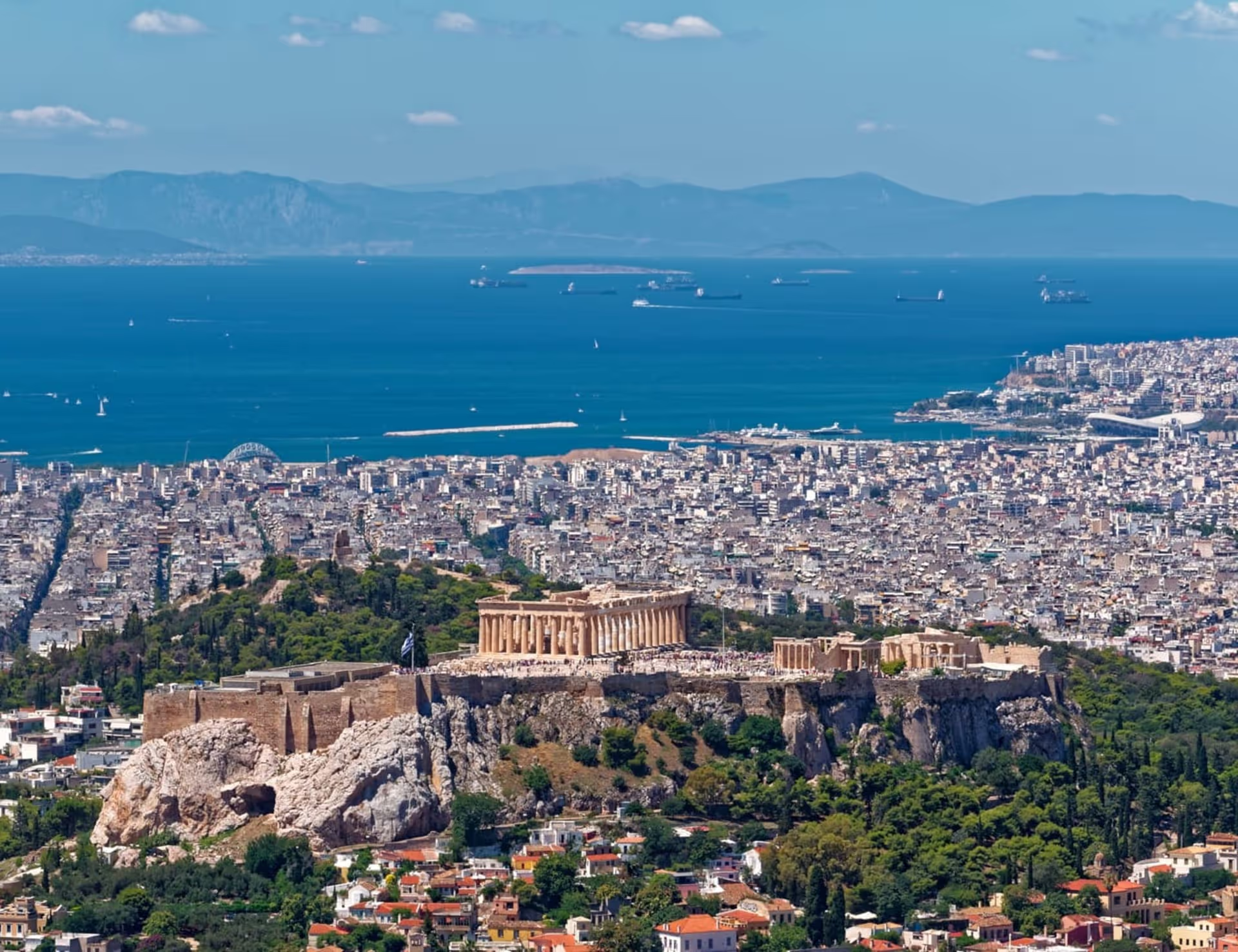
Every Fact Has a Location
Almost everything on this page has a physical spot you can visit. The Pnyx where democracy started. The Theatre of Dionysus where drama was invented. The laneway in Psyrri where the best street art is. The hidden viewpoint of the Acropolis that most visitors never find. Reading about it is one thing. Standing on the rock is different.
My walking experiences cover the hilltops, the back streets, and the spots where Athens' history becomes something you can feel under your feet. If that sounds like your kind of thing, have a look at what we do. And if you're after more ideas beyond the usual tourist trail, here's my guide to unique things to do in Athens.
Athens Facts FAQ
How old is Athens?
Why is Athens called Athens?
What is Athens famous for?
Is Athens worth visiting?
What language do they speak in Athens?
Experience Athens Beyond the Guidebook
George's walking experiences take you to the hilltops, hidden corners, and local haunts where Athens' story comes alive.
See what 2,000+ hikers say about their experience.